Reading the Evidence: A Buyer's Field Guide to Authentic Handwork in an Age of Faux Artisan Labels
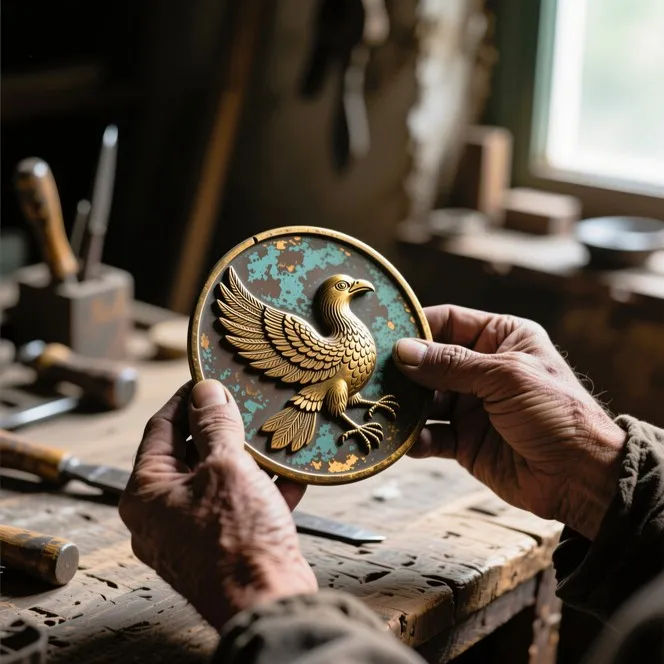
Photo: craftsman hands examining handcrafted metalwork detail workshop, via images.stockcake.com
Walk down the aisle of nearly any American home goods retailer and you will encounter the same vocabulary again and again: artisanal, handcrafted, forged, heritage-made. The words are doing real work. They command higher prices, signal quality, and appeal to a growing national appetite for objects with provenance. The trouble is that the vocabulary is regulated by no one. A product assembled by machines in a factory of two thousand workers can carry the word 'handcrafted' with complete legal confidence.
For the buyer who genuinely wants objects made by human hands, this is more than an inconvenience. It is a market failure of information. The good news: handwork leaves evidence. Machines are consistent by design; hands are consistent only through skill, and even then they leave traces. Learning to read those traces is not difficult. It requires only knowing where to look.
Start With the Joints, Because Machines Struggle Where Hands Excel
The joins of an object — where two parts meet — are the most honest place on any product. Hand-cut joinery in furniture, for example, produces dovetails that are symmetrical in intent but never identical in spacing. A hand-cut dovetail shows slight irregularities in the pins, and the tails are typically sharper and more finely tapered than machine-cut versions, which tend to be broad and uniform because the jig that cuts them must be durable.
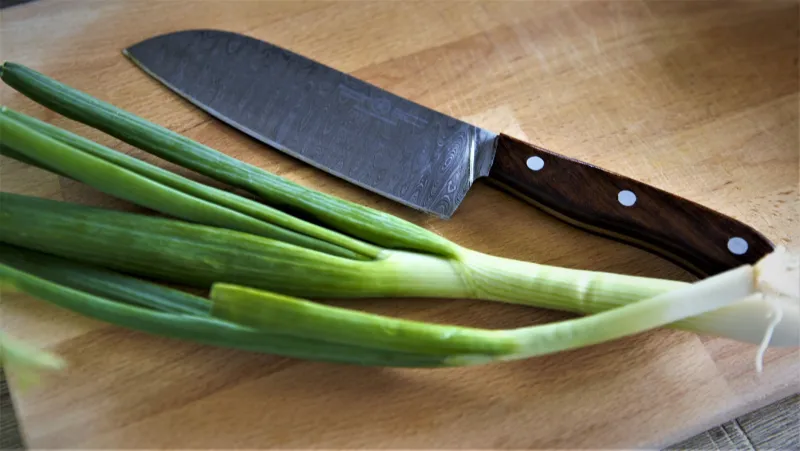
The same logic applies elsewhere. On a forged knife, look at the junction where the blade meets the handle. A true full-tang construction, where the steel runs the length of the handle, is visible at the edges. Stamped, machine-assembled knives often hide a rat-tang inside a molded handle. On leather goods, examine the stitching: hand-stitching uses a saddle stitch with two needles and produces a slightly diagonal, irregular thread line, while machine stitching runs in perfectly straight, lockstitched rows. Machines do not wobble. People who are skilled wobble beautifully.
Learn to Read Tool Marks
Tool marks are the handwriting of craft. A hand-forged blade often carries faint hammer facets along its flats — shallow, overlapping facets that catch light unevenly. A hand-thrown pot shows concentric throwing rings on the interior and, frequently, finger lines where the maker lifted it from the wheel. Hand-planed wood surfaces reveal subtle scalloping under raking light, unlike the dead-flat uniformity of sanding or the repeating grain-mimicking pattern of printed veneer.
The critical distinction is this: irregularity alone proves nothing. Sloppy machine work can also be irregular. What you are looking for is purposeful irregularity — variation that follows a logic, repeating in rhythm, consistent with a body moving through a process. Genuine tool marks look like decisions. Fake distressing looks like damage.
Ask for Documentation, and Watch How the Seller Responds
Legitimate makers are rarely offended by informed questions. In fact, they welcome them. Before purchasing, ask three things:
- Who made this, and where? A real answer includes a person, a shop, and a location. 'Designed in Portland, made with pride overseas' is not an answer; it is a deflection.
- What is it made of, and where did the material come from? Makers who forge their own steel, mill their own lumber, or tan their own leather can usually tell you the source — sometimes the specific mill or mine.
- How was it made? Vague answers to a direct process question deserve suspicion. A chairmaker can describe the steam-bending. A bladesmith can describe the heat treat.
The response matters as much as the content. Makers of genuine handwork tend to answer with enthusiasm and specificity. Companies running marketing language past a call center tend to answer with adjectives.
Check the Sourcing Chain and the Price Logic
Transparency about materials is one of the strongest signals available to a remote buyer. Small American workshops typically name their suppliers because their suppliers are part of their story — the Wisconsin tannery, the Pennsylvania hardwood dealer, the domestic steel billet. When a brand is silent about where raw material originates while loudly proclaiming craftsmanship, the silence is data.
Price is the other checkpoint. Genuine handwork is expensive, and the arithmetic is not mysterious: skilled labor takes hours, and those hours must be paid. A 'handcrafted' knife offered at $29 in unlimited quantity is telling you something about its true origin, no matter what the label says. This does not mean every expensive object is authentic — premium pricing is easily faked — but implausibly cheap pricing is nearly always a confession.
The Saveable Checklist
Before you buy anything labeled artisanal, run it through these eight checkpoints:
- Examine the joints: hand-cut joinery shows purposeful variation; machine work shows uniformity.
- Look for tool marks under angled light: hammer facets, throwing rings, plane scallops, saddle stitching.
- Ask who made it, and expect a person and a place, not a brand story.
- Ask where the materials came from; silence about sourcing is a warning.
- Ask how it was made; specificity is a signature of genuine knowledge.
- Check the price against the hours real handwork requires.
- Look up the maker's workshop: real shops have addresses, photos, and often waitlists.
- Prefer direct purchases or retailers who can connect you to the maker.
None of these checks requires expertise. They require only the willingness to look closely and ask plainly — the same qualities, it is worth noting, that the makers themselves bring to the bench every morning. The market rewards those who can tell the difference. Increasingly, it is the only defense the discerning buyer has.