The Arithmetic of Permanence: Why Handcrafted Goods Cost Less Than You Think
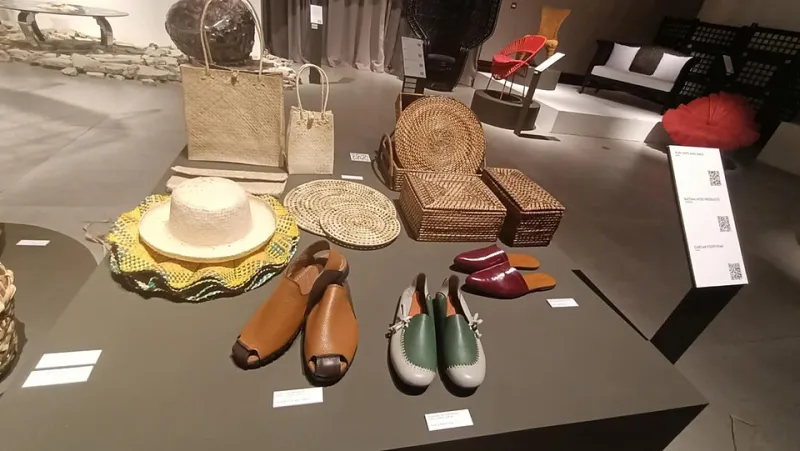
Photo: Bim24, CC0, via Wikimedia Commons
The Price Tag Is Not the Price
American consumers are conditioned to evaluate purchases by a single, immediately visible number: the retail price. It is a habit reinforced by decades of mass-market retail culture, discount advertising, and the relentless promise that cheaper is always smarter. But this framing obscures a more complex and consequential arithmetic — one that becomes visible only when you account for the full lifespan of what you buy.
Consider two kitchen knives. The first is a mass-produced blade manufactured overseas, retailing for $18. The second is a hand-forged high-carbon steel knife produced by an American smith, priced at $220. By conventional logic, the first knife is the sensible choice. By lifecycle logic, it may be the most expensive decision you make.
Running the Numbers: A Lifecycle Cost Analysis
Lifecycle cost analysis — a methodology used in engineering, architecture, and public policy to evaluate the true cost of an asset over its full useful life — offers a more honest framework for consumer decision-making.
The mass-produced $18 knife, constructed from low-grade stainless steel with a factory-pressed handle, has an average useful life of approximately two to three years under regular household use before the edge degrades beyond practical resharpening, the handle loosens, or the blade develops corrosion. At that point, it is discarded and replaced. Over a 30-year period, a household might purchase ten to fifteen such knives, spending between $180 and $270 — and that figure does not account for the cumulative cost of replacement cutting boards damaged by poorly maintained edges, nor the time expenditure of repeated purchasing decisions.
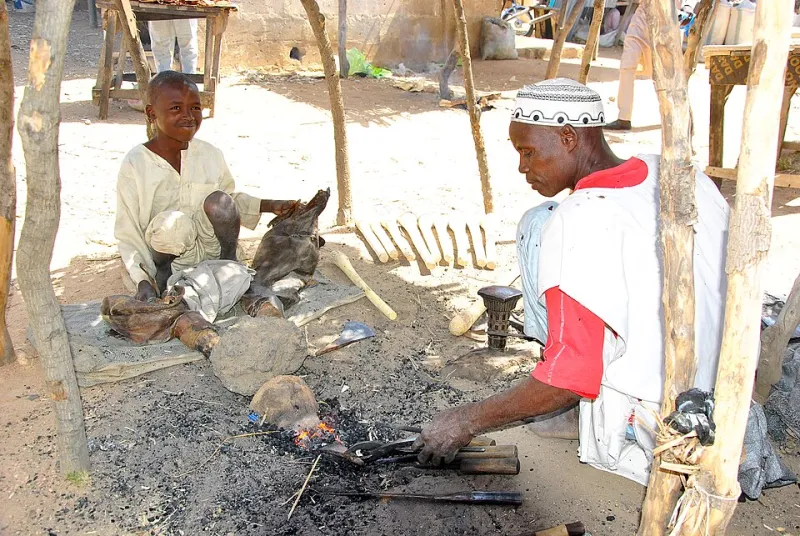
The hand-forged knife, properly maintained, will outlast its owner. High-carbon steel, when cared for with periodic oiling and correct storage, develops a patina that actually enhances its corrosion resistance over time. Its edge, ground by hand to a geometry suited to long-term use, can be restored with a whetstone indefinitely. Its handle, fitted and finished by a craftsperson, is designed to be re-handled if necessary. The $220 purchase, amortized over 30 years, costs approximately $7.33 per year — a fraction of the disposable alternative.
This pattern holds across virtually every category of handcrafted goods: leather goods, woolen textiles, wooden furniture, cast iron cookware, and hand-stitched footwear all demonstrate substantially lower per-year costs when evaluated over realistic ownership periods.
What Customers Are Saying
The most compelling testimony on this subject does not come from analysts — it comes from the people who have lived the comparison.
Caroline Estes, a 58-year-old schoolteacher from Burlington, Vermont, purchased a hand-stitched leather bag from an American artisan in 1998. "I paid $340 for it, which felt like an enormous amount at the time," she recalls. "My colleagues thought I was being extravagant. But I still carry that bag every day. I've had the strap replaced once, for $40. In 26 years, I've spent $380 total. The women in my department who bought department-store bags have probably spent three or four times that."
Similarly, Robert Anagnos, a contractor in Phoenix, Arizona, describes the work boots he purchased from a small-batch American bootmaker in 2009. "I've resoled them twice. The leather has worn to the shape of my foot. My son wants them when I'm done with them. You don't get that from a $90 pair of boots from a big-box store."
These accounts are not exceptional. They are representative of a pattern that emerges consistently among consumers who have made the deliberate shift toward quality over quantity: the initial financial adjustment is real, but the long-term relief — financial, practical, and psychological — is equally real.
The Environmental Ledger
The economic case for handcrafted goods is compelling on its own terms. But the environmental case may be even more urgent.
The fashion and consumer goods industries are among the most resource-intensive on the planet. The Ellen MacArthur Foundation estimates that the equivalent of one garbage truck of textiles is landfilled or incinerated every second globally. The production of cheap, disposable goods generates disproportionate carbon emissions, water consumption, and chemical waste relative to the functional value delivered — because those goods are designed to be replaced, not preserved.
Handcrafted, heirloom-quality production operates on an entirely different ecological logic. When a skilled artisan produces a single object intended to last 50 or 100 years, the energy and materials invested in that object are amortized across a vastly longer useful life. The carbon footprint per year of ownership drops dramatically. Moreover, artisanal production typically involves fewer toxic inputs, shorter supply chains, and — when sourced domestically — significantly reduced transportation emissions.
A hand-forged iron tool produced in an American workshop, using domestically sourced steel, represents a supply chain of perhaps three or four steps. The equivalent mass-produced item may have traveled through a dozen countries, through container ships, freight trains, and distribution centers, before reaching a retail shelf. The cumulative environmental cost of that journey is rarely reflected in the retail price — but it is paid nonetheless, by the atmosphere, by watersheds, and by communities living near industrial production sites.
The Hidden Cost of Cheap: Cognitive and Emotional Taxation
There is a dimension of the disposability economy that rarely appears in consumer research but is widely recognized by those who have escaped it: the cognitive and emotional burden of managing cheap, unreliable goods.
When a product fails — a zipper breaks, a sole separates, a blade chips — the consumer must absorb not only the replacement cost but the time, attention, and low-grade frustration of identifying, evaluating, and acquiring a substitute. Multiplied across dozens of product categories over years, this friction accumulates into a significant tax on attention and wellbeing.
Owning fewer, better things reduces this burden substantially. A well-made object that performs reliably, year after year, requires no replacement calculus. It simply works. This is a form of cognitive freedom that the disposability economy, by design, does not offer.
Investing in Objects Worth Inheriting
Perhaps the most profound distinction between handcrafted and mass-produced goods lies in what happens to them at the end of a human life. Factory goods are discarded. Artisanal goods are inherited.
The concept of the heirloom — an object of sufficient quality and significance to be passed between generations — has been nearly eliminated from everyday consumer culture. Most contemporary households contain very little that their grandchildren would want or be able to use. This represents not only a material impoverishment but a rupture in the continuity of family and cultural identity that objects have historically helped to sustain.
At Voitheia Forged, we believe that the objects we choose to bring into our lives are not neutral. They carry values — of care or carelessness, of permanence or disposability, of respect for craft or indifference to it. Choosing a handcrafted piece is, in this sense, a vote for a different kind of economy and a different kind of relationship with the material world.
The arithmetic, when honestly calculated, is clear. Buying well is not a luxury. It is, over any meaningful timescale, the most rational and responsible choice an American consumer can make.