The Quiet Commitment: Why Some Young Makers Are Choosing Depth Over Digital Fame
There is a particular kind of pressure that follows a young person into the workshop today — one that has nothing to do with the material in front of them. It arrives through the phone in their pocket, in the form of an unspoken question: Why aren't you posting this?
In an era when personal branding has become its own form of currency, the choice to remain anonymous feels almost radical. Yet a quiet but meaningful contingent of apprentice craftspeople across the United States is making precisely that choice. They are forgoing the follower counts, the behind-the-scenes reels, and the carefully curated workshop aesthetics in favor of something harder to photograph: the sustained, unglamorous accumulation of real skill.
What drives that decision, and what does it cost — or ultimately preserve — in the maker who makes it?
The Architecture of Apprenticeship
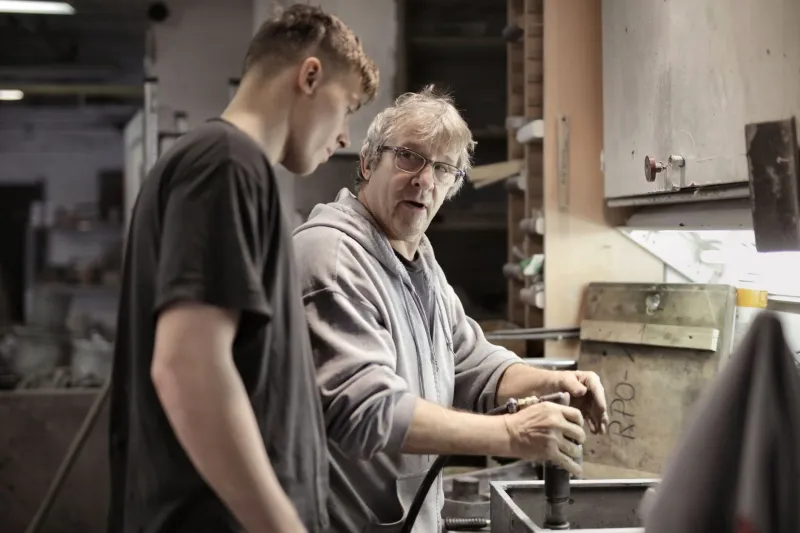
The traditional apprenticeship model was never designed with an audience in mind. Its architecture is fundamentally inward-facing. A novice enters a master's workshop not to perform their learning but to undergo it — to absorb technique through repetition, correction, and the particular intimacy of working alongside someone who has already made every mistake worth making.
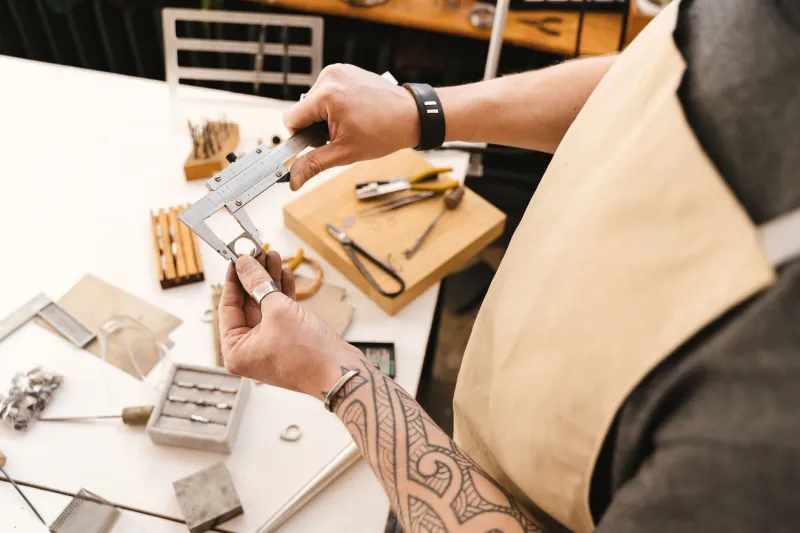
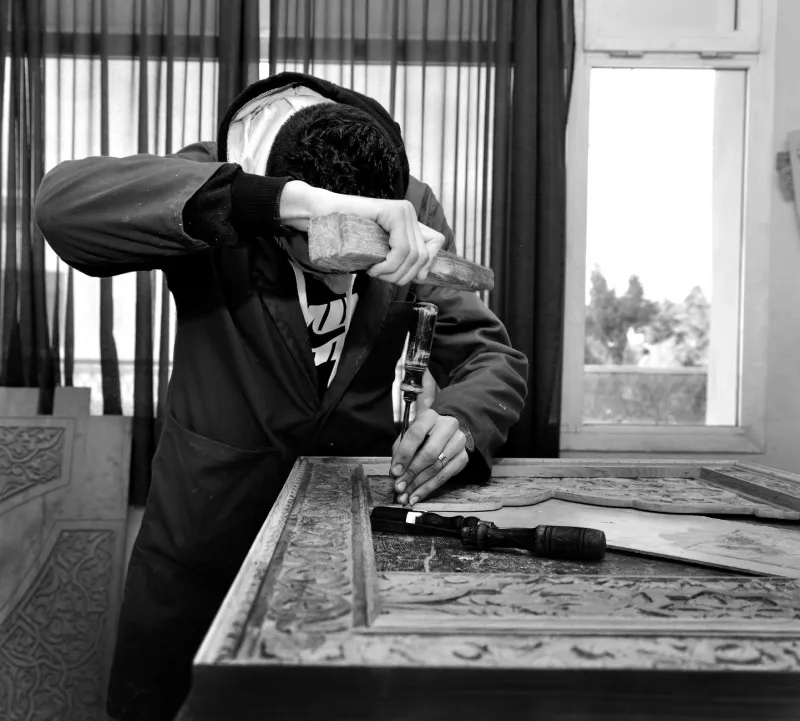
This structure demands a quality that social media actively erodes: the willingness to be bad at something without witnesses. An apprentice learning to set a hand-cut dovetail joint or draw out a taper at the forge will fail hundreds of times before the motion becomes second nature. The failure is not incidental to the process — it is the process. To document and publish that failure, or to feel the pull toward presenting only the polished outcomes, is to subtly distort the experience of learning itself.
Several young craftspeople interviewed for this piece described a version of the same phenomenon. When they attempted to maintain an active online presence during the early years of their training, the quality of their attention in the shop began to fragment. They found themselves framing experiences for an imagined audience rather than inhabiting them fully. One blacksmithing apprentice working in rural Vermont put it plainly: "I started noticing that I was thinking about how to describe what I was doing before I actually understood what I was doing. That's backwards."
The Visibility Trap
The pressure to be visible is not trivial, and it would be dishonest to dismiss it as mere vanity. For young makers entering a field with narrow economic margins, an online presence can translate directly into early commissions, workshop visibility, and access to a community of peers. The platforms that once felt optional have, for many in the craft world, become practical necessities.
This creates a genuine dilemma. The same channels that can launch a maker's reputation can also freeze that reputation prematurely — locking a craftsperson into a particular aesthetic or skill level at the exact moment they most need the freedom to experiment, fail, and transform.
There is also a subtler distortion at work. Social media rewards consistency of output and recognizability of style. Mastery, by contrast, is frequently achieved through deliberate inconsistency — through the willingness to abandon what is working in order to attempt what is not yet possible. The maker who is accountable to an audience may resist that necessary disruption. The maker who has chosen obscurity is accountable only to the work.
Word of Mouth as a Long Game
Among those who have deliberately stepped back from digital visibility, there is a shared faith in an older form of reputation-building: the slow accumulation of trust through demonstrated quality, delivered to real people in real places.
This is not naïveté. It is a studied wager. A furniture maker in North Carolina who completed a five-year traditional apprenticeship without maintaining a public social media presence described her first years of independent work as genuinely lean. Commissions came slowly, almost entirely through referrals from her mentor and from clients who had handled her finished pieces in person. "There was a period where I questioned the whole thing," she acknowledged. "But the clients I eventually attracted were exactly the right ones — people who had sought me out for specific reasons, who understood what they were asking for, and who were prepared to wait for it."
That alignment between maker and client — built not on algorithmic discovery but on deliberate, word-of-mouth seeking — tends to produce working relationships of unusual depth and longevity. It also tends to produce better work. A commission undertaken without the pressure to generate shareable content exists in a different register entirely.
What Obscurity Protects
There is something worth naming carefully here, because it risks sounding like mere romanticism: the choice to remain unknown during the formative years of a craft education is, in many cases, an act of profound self-preservation.
Mastery is slow. It is slower than any platform's algorithm will accommodate, and it is slower than most audiences will remain interested in watching. The maker who commits to the full duration of that process — without the intermittent validation of likes, shares, or follower milestones — must find their motivation from within the work itself. This is not a comfortable arrangement. It is, however, a durable one.
The craftspeople who emerge from that kind of formation tend to carry a particular quality that is difficult to manufacture retroactively: a deep, unperformed confidence in their own judgment. They have learned to read the work on its own terms, without the mediating influence of external approval. That capacity — to know when a piece is right not because an audience has responded to it, but because the maker's own trained eye and hand have confirmed it — is among the most valuable things a craftsperson can possess.
The Longer Arc
None of this is to suggest that visibility and mastery are inherently incompatible. Many accomplished craftspeople maintain meaningful online presences that genuinely serve both their businesses and their broader communities. The question is one of sequence and proportion — of when, and how much, and toward what end.
What the apprentices who choose obscurity seem to understand, intuitively or explicitly, is that the foundation must be laid before the house is shown. An audience built on the strength of finished, deeply considered work is a different thing altogether from an audience assembled during the uncertain, experimental years of formation. The former is a reflection of genuine achievement. The latter can become a constraint on it.
In a culture that has largely collapsed the distinction between learning and performing, between process and product, between the private act of becoming and the public act of presenting — the choice to simply disappear into the work carries a quiet authority of its own.
Some things, it turns out, are still best built in private.