Surface as Story: How Oxidation Becomes a Craftsperson's Most Honest Signature
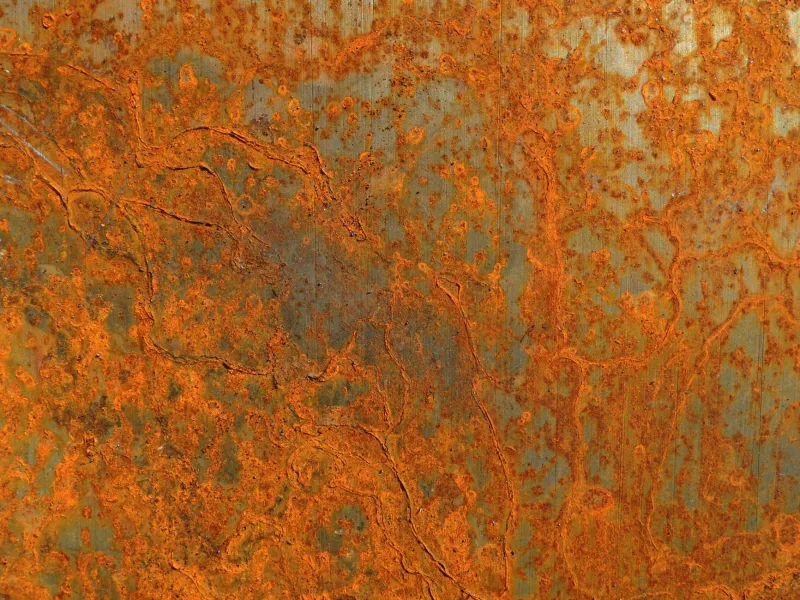
There is a particular kind of discomfort that arises when a customer first notices a warm amber bloom spreading across the surface of a newly acquired forged piece. The instinct, shaped by decades of mass-market conditioning, is to interpret that color as a warning — evidence of something gone wrong, a product failing before its time. Yet among craftspeople who work iron and steel with their hands, that same surface transformation is regarded with something closer to reverence. It is not failure. It is the beginning of a conversation between object and environment, a dialogue that the maker set in motion long before the piece left the workshop.
Understanding why requires a willingness to reconsider what a finished surface actually means.
The Difference Between Deterioration and Development
Not all oxidation is equal, and conflating the two is one of the more costly misunderstandings a customer can bring to handcrafted metalwork. Deterioration is what happens when iron is left unprotected, when moisture penetrates without resistance, when the structural integrity of the metal begins to compromise from within. It is flaking, pitting, powdering — rust in its most destructive expression. Development, by contrast, is a controlled and often intentional process. It is the craftsperson's decision to allow — or actively encourage — the surface to respond to its environment in ways that deepen rather than damage.
The distinction lies almost entirely in preparation and intent. A smith who has properly treated the surface of a forged piece — through heat application, oil finishing, wax sealing, or a combination of these — has not simply protected the metal. They have established the conditions under which the surface will age predictably, gracefully, and in ways that amplify rather than obscure the work beneath. The patina that develops over months and years on such a piece is not the absence of care. It is the evidence of it.
What the Surface Remembers
Every stage of the forging process leaves its mark on the metal, and a knowledgeable eye can read those marks long after the piece has left the fire. The texture of hammer blows, the slight variations in surface color where heat concentrated differently across the form, the faint topography left by tools pressed into hot steel — these are the craftsperson's fingerprints, embedded at the molecular level. When patina develops over time, it does not erase these marks. In many cases, it makes them more legible.
Oxidation tends to settle more deeply into recessed areas, highlighting the dimensionality of the surface in ways that a uniform factory finish actively suppresses. A forged knife blade that has been used and oiled over several years will often show a pattern of color variation that maps almost exactly onto the original hammer work. The high points remain brighter; the valleys deepen toward amber and brown. The result is a surface that carries both the maker's history and the owner's, layered one atop the other in a record no machine can replicate.
This is, in essence, what craftspeople mean when they speak of a piece becoming more itself over time. The surface is not degrading toward some lesser version of the original. It is maturing toward a more complete expression of what it always was.
Intentional Patina as Aesthetic Philosophy
Some craftspeople do not simply allow patina to develop naturally — they cultivate it deliberately as part of the finishing process itself. Forced patination techniques, which have been practiced across cultures for centuries, involve exposing metal to controlled chemical or environmental conditions that accelerate surface oxidation in specific, predictable ways. Vinegar fumes, salt solutions, heat cycling, and various mineral compounds can each produce distinct surface qualities that a skilled smith learns to direct with considerable precision.
The appeal of this approach is not purely aesthetic, though the results are often striking. Intentional patination also serves as a kind of stress test for the surface treatment applied beneath it. A finish that holds its character through accelerated aging is a finish that will perform reliably over years of actual use. For the craftsperson, it is one more opportunity to verify the quality of the work before it reaches the customer's hands.
For the customer, a piece that arrives with an already-developed patina carries a different kind of value proposition. It arrives with its story already begun — not as a pristine object awaiting its first mark, but as something that has already demonstrated its capacity to age well. That demonstration is itself a form of guarantee.
Teaching Customers to Look Differently
Perhaps the most significant challenge facing craftspeople who work in iron and steel is not technical — it is perceptual. The American consumer market has been trained, over generations of industrial production, to associate uniformity with quality. A surface that varies is a surface that has failed some standard. A color that shifts across a blade or a handle is evidence of inconsistency rather than character.
Displacing that assumption requires patience and a willingness to educate without condescension. The most effective craftspeople tend to approach this not by arguing against the customer's instincts but by offering a different framework entirely. Rather than defending patina as acceptable, they invite customers to consider what a perfectly uniform, perpetually sealed surface actually conceals — and what a living surface, one that responds to use and environment, actually reveals.
The conversation often shifts when customers begin to understand that a mass-produced object is finished precisely to prevent this kind of surface development. It is sealed against the world because the world would expose what lies beneath. A handcrafted piece, finished with intention and confidence, has nothing to hide. The craftsperson who allows — or encourages — a surface to age openly is making a statement about the quality of the work at every layer.
Stewardship as Participation
There is one further dimension to this subject that deserves consideration, and it concerns the customer's role in the life of a handcrafted object. Patina does not develop in isolation. It develops in response to use, to handling, to the specific conditions of a particular home or workshop or kitchen. The oils from a person's hands, the humidity of a particular region, the frequency with which a piece is used and cleaned — all of these factors shape the surface over time in ways that are genuinely unique to that object and that owner.
This means that the customer is not simply a recipient of the craftsperson's work. They are, in a very real sense, a participant in its ongoing completion. The stewardship they bring to the piece — the regularity with which they oil a blade, the care with which they store a forged tool, the attention they pay to early signs of actual deterioration versus healthy development — becomes part of the object's story as surely as the hammer work that shaped it.
Understanding patina, then, is not merely an aesthetic education. It is an invitation into a different relationship with the objects one owns — one defined not by passive consumption but by active, informed care. That relationship is precisely what distinguishes the customer who purchases a handcrafted piece for its surface novelty from the one who acquires it as a long-term companion.
The surface, in the end, does not lie. It records everything — the maker's skill, the owner's attention, the passage of time through a life well used. That is not a flaw to be corrected. It is the point.