Received, Not Earned: The Weight of Inheriting Someone Else's Craft
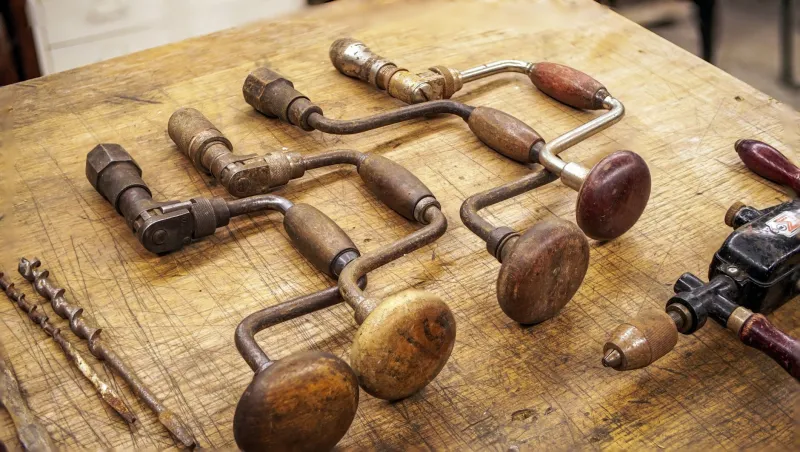
There is a particular kind of stillness that settles over a person when they open a box and find their grandfather's hand-forged drawknife, or their grandmother's set of cabinetmaking chisels, still wrapped in the same oiled cloth that last touched a living hand years ago. The object is immaculate. The object is foreign. And the object, in some quietly insistent way, is asking something of you.
For a growing number of Americans navigating the estates of parents and grandparents who worked in skilled trades or pursued serious craft, inherited tools and handmade objects present a dilemma that sits far beyond the practical. These are not decorative items easily placed on a shelf. They are instruments shaped by use, bearing the wear patterns of a specific person's grip, a specific person's habits, a specific person's decades of accumulated intention. To receive them is, in some sense, to receive a responsibility.
The question is what that responsibility actually requires.
The Myth of Obligatory Preservation
American culture carries a strong instinct toward preservation when it comes to family objects. To keep something is understood as honoring the person who owned it. To pass it along — or, more uncomfortably, to sell it — can feel like a betrayal, as though the object's worth is inseparable from its continued presence in the bloodline.
But this instinct, however understandable, can quietly distort the relationship between inheritor and object. A set of hand-cut woodworking planes does not become more honored by sitting in a garage, slowly losing its edge to humidity and neglect. A forged knife does not fulfill its maker's intention by remaining unused in a display case. These objects were built to work. Their makers understood them as functional extensions of human skill, not as monuments.
The makers themselves, in most cases, would have recognized this. Craftspeople who spend years shaping tools and objects tend to hold a pragmatic view of their work's destiny. What they built was meant to be used — preferably by capable hands, in purposeful service. Sentiment, while not unwelcome, was rarely the primary design specification.
When the Gap Between Maker and Inheritor Is Real
The practical reality is that most people who inherit craft objects have no working relationship with the skills those objects represent. A grandchild who grew up in a city apartment, building a career in finance or healthcare, is not automatically equipped to maintain, let alone use, a set of hand-forged farrier's tools or a collection of specialized joinery equipment. The gap between what the object demands and what the inheritor can offer is not a moral failing. It is simply a fact.
Ignoring that gap, however, tends to serve no one well. Objects that require specific knowledge to maintain will degrade without it. Tools calibrated to a maker's particular methods may be rendered useless — or even dangerous — in untrained hands. And the inheritor, burdened by a sense of obligation they cannot practically fulfill, often ends up carrying a form of low-grade guilt that accumulates over years.
The more honest reckoning begins with a clear-eyed assessment of what one is actually capable of offering. Not what one wishes one could offer, and not what the object seems to demand, but what is genuinely sustainable given one's life, skill level, and available attention.
The Legitimate Act of Passing Along
There is a practice in serious craft communities that speaks directly to this dilemma: the deliberate transfer of a tool or object to someone who will genuinely use it. Among working craftspeople, this is not considered a diminishment. It is considered a form of respect — for the object, for the original maker, and for the craft itself.
An heirloom drawknife passed to a working chairmaker who will use it daily honors the object's purpose far more completely than the same tool sitting in a climate-controlled spare room. A hand-forged knife entrusted to a serious cook who will maintain its edge and carry it with appreciation fulfills more of its maker's intention than it would locked in a display case.
For inheritors who find themselves in possession of objects they cannot properly steward, seeking out that kind of placement — whether through craft communities, trade organizations, regional woodworking guilds, or museum collections — represents a genuinely honorable path. It requires setting aside the cultural instinct to equate possession with respect, and replacing it with a more considered understanding of what respect for a maker's work actually looks like.
What Keeping Something Actually Requires
For those who do choose to keep inherited craft objects, the commitment deserves to be made consciously rather than by default. Keeping a hand-forged tool or handcrafted object in a condition worthy of its origins requires research, ongoing maintenance, and in many cases the development of at least foundational skill.
This is not necessarily a burden. For some inheritors, the receipt of a craft object becomes the catalyst for a genuine engagement with the trade it represents. There are people who came to blacksmithing, to woodworking, to leatherwork, because a grandparent's tools arrived in a box and refused to be ignored. The object became an invitation, and the inheritor accepted it.
That outcome, when it occurs organically, is among the most complete forms of inheritance imaginable — not just the physical object, but the practice it was built to serve, carried forward by a new pair of hands. It is the closest thing to an unbroken chain that most families will manage.
But it must be genuine. A halfhearted attempt to learn a trade out of obligation, sustained only by guilt, serves neither the inheritor nor the object. The craft will sense the difference, as craftspeople often say, in ways that are difficult to articulate but impossible to ignore.
Honoring Intention Over Object
Ultimately, the most useful reframe for anyone navigating an inherited craft object is to ask not what the object requires, but what the maker's intention was. Most serious craftspeople — the kind who produce objects worth inheriting — made things because they believed in the value of skilled, deliberate work. They believed in quality, in longevity, in the idea that something made well deserves to be used well.
Honoring that intention does not necessarily mean keeping the object in the family. It may mean finding it a home where it will be properly used. It may mean learning the skill to use it yourself. It may mean donating it to an institution where it will be preserved and interpreted for future generations.
What it does not mean is storing it out of guilt, displaying it without context, or allowing it to degrade through benign neglect while telling yourself that proximity constitutes care.
Handcrafted objects are not passive. They were made by people who brought discipline and judgment to every decision. The least their inheritors can offer is the same quality of thought in deciding what comes next.