Speaking the Language of the Hand: How Craft Vocabulary Shapes What Makers See and Know
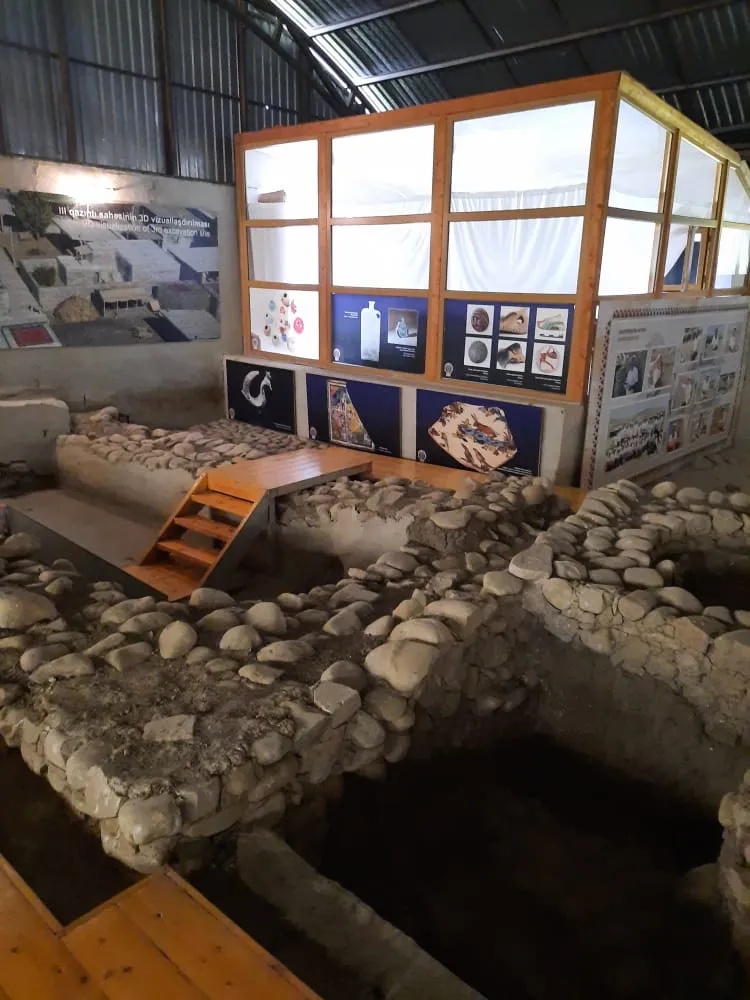
Photo: Agsu Qorugu, CC0, via Wikimedia Commons
A factory floor operates on the language of tolerance. Measurements are stated in thousandths of an inch. Deviation is quantified, logged, and corrected against a fixed specification. The vocabulary is precise in a particular way—calibrated for repeatability, for the elimination of variation, for the assurance that what comes off the line on a Tuesday in March is indistinguishable from what came off the line on a Friday in October.
The workshop of a skilled artisan runs on an entirely different set of words.
In a blacksmithing shop, a piece of steel is not simply "bent." It is drawn down, upset, fullered, or swaged—each term describing not just what happened to the metal, but the specific interaction between tool, heat, force, and intention that produced a given result. A leatherworker does not merely cut; they skive, bevel, and burnish, each word naming a distinct relationship between blade angle, hide thickness, and the finish the maker is working toward. A furniture maker speaks of figure in wood grain, of racking, of seasonal movement—terms that communicate not only what the wood is doing, but what it is likely to do across the decades ahead.
This is not the vocabulary of description. It is the vocabulary of understanding.
Words as Tools
There is a well-documented relationship between language and perception. The terms available to a person shape, in measurable ways, what that person is able to notice. Researchers studying color perception across cultures have found that speakers of languages with more granular color distinctions are faster and more accurate at distinguishing subtle hues. The same principle applies, with equal force, to craft.
When a glassblower learns to speak of gather, marver, and anneal, those words do not simply label actions already understood. They organize the maker's attention. They create categories of observation that a novice—who may watch the same process and see only "heating" and "shaping"—does not yet possess. The vocabulary is, in a very real sense, the training.
This is why the language of a craft trade cannot be separated from the craft itself. To lose the words is to lose the distinctions they encode. And to lose those distinctions is to lose a form of perception that took generations to develop.
The Problem of Translation
Consider the concept of spring back in metalworking. When a piece of steel is bent, it does not hold its exact formed angle—it rebounds slightly, the degree of rebound depending on the alloy, the thickness, the method of forming, and the temperature at which the work was done. An experienced smith knows this intuitively and compensates without conscious calculation. The word spring back gives that intuition a handle, a way of being discussed, taught, and refined across the relationship between master and apprentice.
Now consider how you would explain spring back to a production engineer designing a stamping die. You can approximate it—you can speak of elastic deformation, of yield strength, of bend allowance calculations. The engineering vocabulary is not wrong. But it describes the phenomenon from the outside, as a variable to be controlled. The craftsperson's term describes it from the inside, as a property to be understood and worked with. These are genuinely different orientations toward the same physical reality.
This gap between industrial language and craft language is not a matter of sophistication. It is a matter of relationship. The factory seeks to eliminate spring back as a source of inconsistency. The skilled smith learns to read it, anticipate it, and use it—sometimes deliberately incorporating it into the finished form. One vocabulary suppresses the material's character. The other converses with it.
Fluency as Quality Standard
In traditional craft apprenticeships—the kind that shaped American trades before the mid-twentieth century largely dismantled the system—linguistic fluency was understood as an index of competency. A young joiner who could not speak precisely about grain direction, datum surfaces, or the difference between flatness and levelness was not yet a joiner in any meaningful sense. The ability to name things correctly was evidence that the maker had begun to see correctly.
This remains true in workshops that still operate by those older principles. At Voitheia Forged, we recognize that the language a maker uses when discussing a piece in progress is one of the most reliable indicators of the depth of their engagement with it. A maker who says a surface "looks flat" is working from a different standard than one who can articulate the specific test—winding sticks, a reliable straightedge, raking light at a low angle—by which flatness is actually verified. The words point toward the methodology, and the methodology points toward the quality of the result.
Preservation as Purpose
There is a cultural dimension to this conversation that deserves more attention than it typically receives. The specialized vocabularies of craft trades are, in a meaningful sense, forms of intangible heritage. They encode the accumulated problem-solving of countless generations of makers who worked through the same challenges—how to join two pieces of wood so the seasonal movement of one does not destroy the other, how to temper steel so it holds an edge without becoming brittle, how to finish a surface so it ages with dignity rather than deteriorating.
When a craft trade dies out, or when its practitioners abandon the old vocabulary in favor of more generic industrial language, that encoded knowledge does not simply go dormant. It disperses. The words that carried it no longer have speakers, and the distinctions they named become invisible—not because the phenomena they described have ceased to exist, but because no one any longer has the language to notice them.
The revival of American craft trades, which has gathered genuine momentum over the past two decades, is not only a revival of technique. It is, necessarily, a revival of vocabulary. Young makers who commit to learning a discipline from experienced practitioners are inheriting not just a set of skills but a way of speaking about and perceiving their work. That inheritance is as valuable as any tool passed from one generation to the next.
The Limits of the Algorithm
Automation has made extraordinary inroads into manufacturing over the past generation, and there is little reason to expect that trend to slow. But the specific vocabulary of craft—and the perceptual training it represents—remains stubbornly resistant to replication by algorithmic systems. A machine vision system can be trained to flag surface defects. It cannot be trained to develop the intuitive understanding of why a particular defect occurred at this point in this piece, what it reveals about the interaction of tool and material, and how that understanding should inform the next pass of work.
That kind of knowing lives in language, and language lives in people. It is transmitted through conversation, through demonstration, through the slow accumulation of shared experience between a maker who has seen a thousand versions of a problem and an apprentice who is seeing it for the first time. No database captures it. No training module transmits it. It passes, as it always has, through the words that one skilled person speaks to another.
The vocabulary of imperfection—and of the judgment required to work with and through imperfection—is, in the end, a vocabulary of humanity. And that is precisely why it endures.