The Moment of Silence: How Skilled Makers Recognize When a Piece Has Said Everything It Needs To
In a factory, completion is defined by a clock or a quota. A component travels down a line, receives its final treatment at a predetermined station, and exits the process because the process says it should. There is no negotiation. The object does not weigh in.
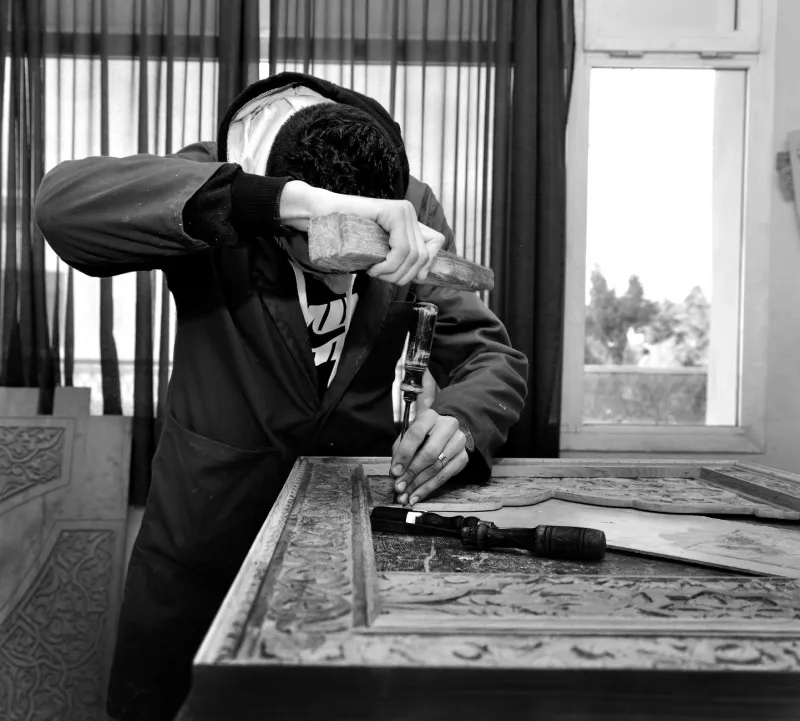
In a workshop where hands govern the pace, the question of when a piece is finished is answered very differently — and often in ways that resist easy articulation. Experienced craftspeople, when pressed, tend to reach for language that sounds almost mystical: the piece told me. It settled. Something released. Those descriptions are not evasion. They are the honest vocabulary of a kind of knowledge that lives below conscious reasoning, built from years of repetition and failure and gradual refinement.
Understanding how that knowledge operates — and why it matters — says something essential about what handcrafted objects are and why they endure.
The Intelligence That Cannot Be Scheduled
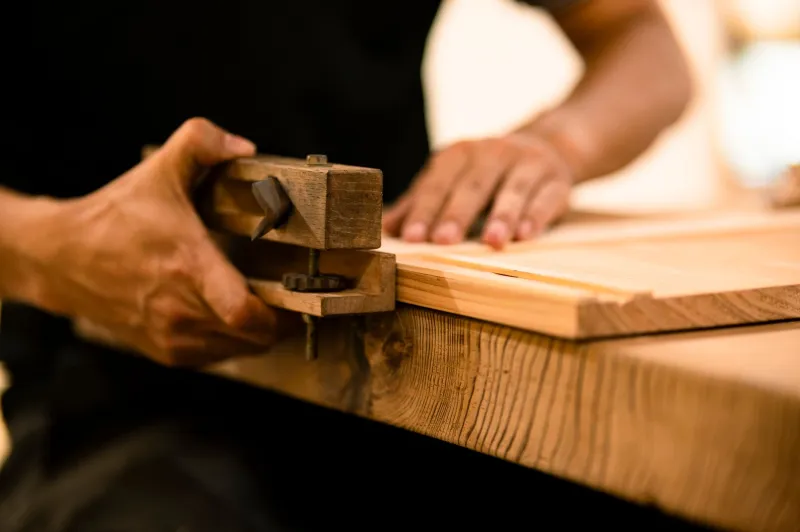
Every skilled maker accumulates what researchers who study expertise sometimes call tacit knowledge: understanding that has been absorbed so deeply through practice that it no longer requires deliberate thought. A blacksmith does not consciously calculate the color of heated steel against ambient light and forge temperature — she simply knows, from thousands of hours at the anvil, what a particular orange-yellow glow means about what the metal will accept. A woodworker does not consciously enumerate the grain direction, moisture content, and tool angle that will produce a particular surface — his hands have internalized that calculus and deliver it as sensation.
This same internalized intelligence governs the recognition of completion. It is not a single signal but a convergence of many: the way a surface reflects light across its full length without interruption; the way a joint sits under finger pressure without the faintest suggestion of give; the way a form, viewed from an unfamiliar angle, presents nothing that asks to be reconsidered. Each of these is a data point. Together, they constitute a verdict.
The craftsperson who has not yet accumulated that intelligence may over-finish — adding unnecessary passes, compulsively refining what is already resolved, because they cannot yet hear the piece when it stops asking for attention. The one who has accumulated it knows when to put the tool down.
What the Material Communicates
There is a reciprocal quality to this recognition that is easy to overlook. Craftspeople do not merely impose their intentions upon a material; they enter into a sustained conversation with it. Wood has a grain and a history. Metal has a crystalline structure shaped by its origin and its thermal journey. Leather has a hide's specific character — its thickness variations, its natural markings, the way it responds to moisture and tension.
A piece that has been worked with genuine attentiveness begins to reveal what it can and cannot accept. The maker's accumulated experience allows her to hear that communication clearly. When the material has been brought to the fullest expression of what it was capable of becoming — not what the maker originally imagined, but what the collaboration between intention and material produced — there is a kind of coherence that registers as completion.
This is why two pieces made from the same design and the same material by the same hands will rarely be finished at precisely the same moment. Each piece has its own conversation to conclude.
The Danger of the Premature Stop — and the Danger of the Late One
The recognition of completion matters because errors in either direction carry real cost. A piece abandoned before it has reached its full resolution carries a restlessness that the discerning eye — and sometimes the untrained eye — can detect. There is something unresolved in its surfaces, something that the maker's instinct would have addressed had she trusted it further.
But the opposite failure is equally serious. A piece worked past its moment of completion begins to lose what made it right. A surface buffed too long loses the character that gave it warmth. A form refined beyond its natural resolution becomes mannered, effortful, self-conscious. The maker's presence, which should be felt as care and integrity, begins to register instead as anxiety.
Master craftspeople speak about this boundary with a kind of reverence. Knowing where it falls — and having the discipline to honor it — is one of the genuine marks of mastery. It is also, crucially, not a fixed point. The boundary shifts with each piece, each material, each set of conditions. It must be found anew every time.
How This Differs From Every Industrial Standard
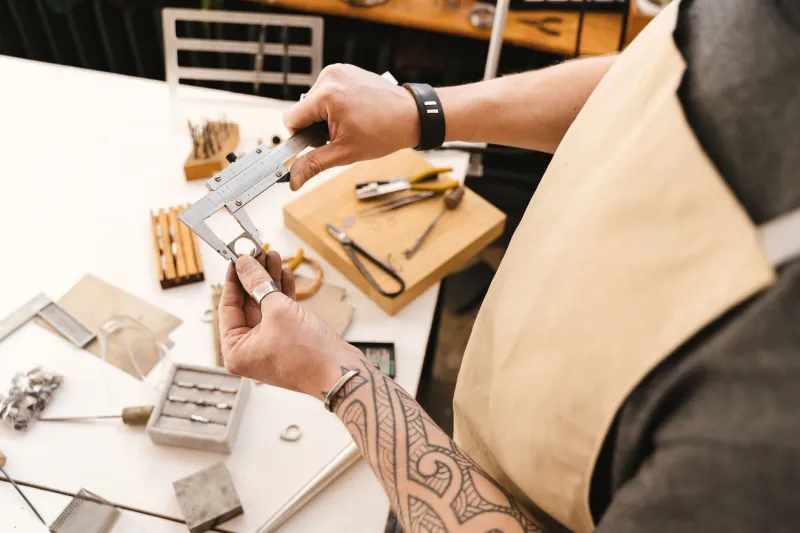
Manufacturing quality control operates through specification: a dimension must fall within a tolerance range, a surface must register below a certain roughness value, a load must be sustained above a minimum threshold. These are legitimate and necessary standards for what they measure. What they cannot measure is the quality of a piece that has been brought to the fullest expression of its own particular potential.
A handcrafted object that has been finished with genuine mastery may or may not conform to the tolerances a factory would apply. In many cases it will exceed them considerably. But the more important point is that its completion was not determined by those tolerances. It was determined by an intelligence that the tolerances cannot fully capture — one that takes into account the specific material, the specific form, and the specific relationship between maker and object that produced it.
This is not romanticism. It is a description of a genuinely different epistemology of quality. The person who owns a handcrafted piece finished with this kind of attentiveness is receiving something that no specification sheet can fully document: the judgment of a skilled human being, applied at its highest level, to the particular object in their hands.
The Transmission of the Standard
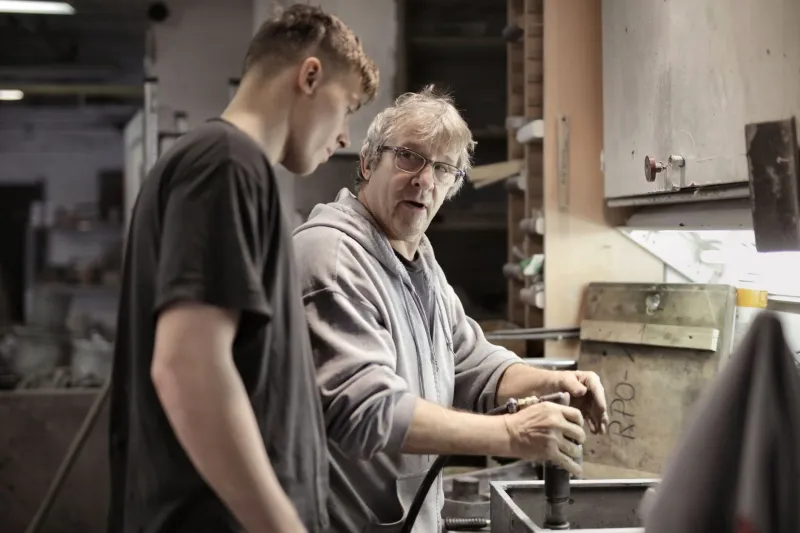
One of the more difficult aspects of craft education is that this recognition cannot be taught directly. It can be modeled, it can be pointed toward, but it must ultimately be developed through the student's own accumulated experience. A master can demonstrate what a finished surface looks and feels like. She can ask the apprentice to compare a resolved piece against an unresolved one and articulate the difference. She can, over time, calibrate the apprentice's judgment by offering consistent feedback against a standard the student is slowly internalizing.
But the moment when that standard becomes genuinely instinctive — when the student no longer needs to check her judgment against the master's because her own has become reliable — is not a moment that can be engineered. It arrives through repetition, through failure, through the gradual accumulation of a knowledge that has nowhere to live except in the body and hands of the person who has earned it.
What that moment represents, when it arrives, is one of the genuine achievements of a craft life. It is also what every handcrafted object, finished with that intelligence, carries within it — a record of a standard that was built over years and applied, without compromise, to the piece now resting in the customer's hands.
That is what it means for a piece to be finished. Not when the clock says so. When the work itself does.