The Broken Chain: How America Lost Its Path From Novice to Master
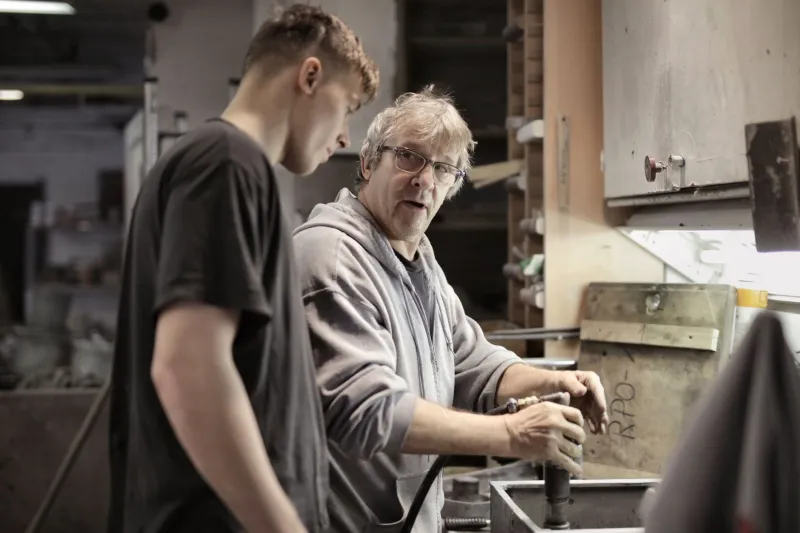
There was a time when entering a trade meant entering a relationship. A young person would present themselves at the door of a workshop, and if accepted, they would spend years—sometimes the better part of a decade—learning not merely the mechanics of a craft but its entire living grammar: the way a seasoned hand reads grain before committing a blade, the silence observed when a senior craftsman is working through a problem, the unspoken protocol of a well-ordered shop floor. That relationship, formalized across centuries as the apprenticeship, was never simply about skills transfer. It was the primary means by which a civilization preserved its most hard-won knowledge.
In the United States today, that relationship is fracturing—and the damage is more structural than most people recognize.
What an Apprenticeship Was Actually Meant to Be
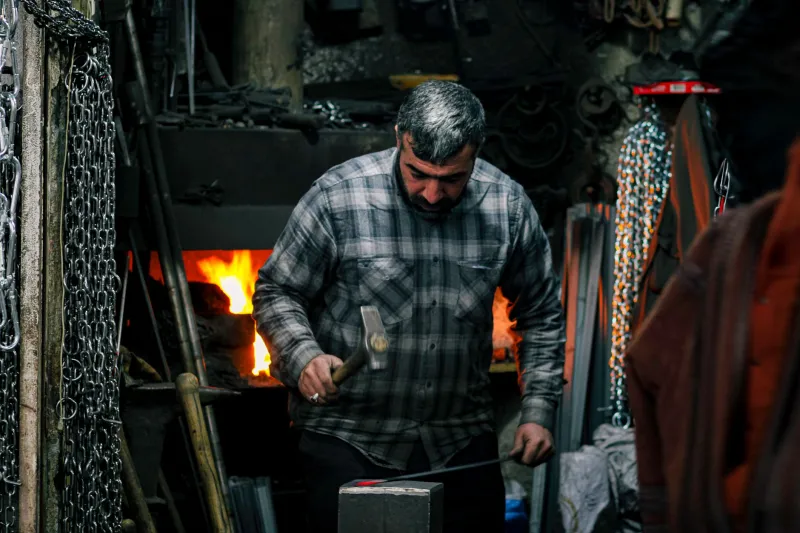
The classical apprenticeship was not a training program. It was an immersion. A young apprentice did not receive instruction so much as they received proximity—to a master's judgment, decision-making, and daily discipline. Over time, through repetition and close observation, the apprentice absorbed knowledge that no manual could encode. How much pressure to apply before the metal begins to yield. When a weld is visually acceptable but structurally suspect. The particular sound a well-set joint makes versus one that will fail under load.
This kind of knowledge—what philosophers of craft sometimes call tacit knowledge—cannot be transmitted through coursework or digital tutorials. It lives in the hands and the eyes of experienced practitioners, and it passes between people only through sustained, intimate working relationships. The apprenticeship was the institution designed specifically to carry that transmission forward.
For much of American history, trade guilds, union halls, and family workshops sustained versions of this model. A young ironworker in Pittsburgh or a cabinetmaker's apprentice in North Carolina could reasonably expect to spend three to five years under meaningful supervision before being trusted to work independently. The timeline was not arbitrary. It reflected how long genuine competence actually takes to develop.
The Compression Problem
Modern vocational training has largely abandoned that timeline. The economic logic is understandable: students need to enter the workforce quickly, training programs compete for enrollment, and employers want workers who are productive on arrival. The result is a compression of apprenticeship timelines that strips the model of much of its original value.
Many contemporary trade programs run twelve to eighteen months—sufficient to teach foundational procedures but far too brief to cultivate the deeper judgment that distinguishes a competent technician from a genuine craftsman. A student can learn to execute a standard weld in a controlled setting within weeks. Learning to read a weld—to understand what the bead's width, color, and surface texture reveal about the quality of the bond beneath—requires years of guided practice and the patient correction of an experienced eye.
What gets lost in compressed timelines is not the procedure. It is the wisdom behind the procedure.
The Mentorship Vacuum
Equally damaging is the erosion of the mentorship relationship itself. In traditional apprenticeship structures, the master craftsman had a direct stake in the apprentice's development. The apprentice's growing competence was an extension of the master's own legacy and, in practical terms, an investment in the future capacity of the shop. That alignment of incentives created powerful motivation on both sides.
Today's production environments rarely replicate that alignment. Senior craftspeople in manufacturing settings are often evaluated on output metrics that make extended mentorship costly. Taking time to explain, demonstrate, and patiently correct a junior worker is time not spent producing—and in environments where throughput is measured daily, that trade-off is difficult to justify. The result is that experienced makers frequently pass through the end of their careers without formally transmitting what they know to anyone.
This is not a failure of individual generosity. It is a structural failure—a system that has quietly ceased to reward the patient, relationship-intensive work of knowledge transfer.
Economic Barriers at the Entry Point
For young Americans considering a path into traditional craft trades, the economic barriers are formidable. Unlike four-year college programs, which have well-established financing mechanisms—however imperfect—craft apprenticeships often offer modest stipends or reduced wages during training. A young person from a working-class family may find it genuinely impossible to accept years of below-market compensation, regardless of their interest in the craft.
The cultural dimension compounds the economic one. For at least two generations, American families have been conditioned to view a four-year college degree as the default pathway to a stable and respected life. Trade work—regardless of its intellectual demands or its long-term earning potential—carries a persistent stigma that discourages talented young people from even investigating apprenticeship as an option. The makers who would most benefit from exceptional apprentices never meet them, because those individuals were steered elsewhere before the conversation could begin.
What Forward-Thinking Shops Are Doing
Amid this landscape, a meaningful number of small makers and independent workshops are attempting to rebuild functional apprenticeship models—often without institutional support and sometimes at significant personal cost.
Some have formalized multi-year training agreements that spell out the progression of responsibilities, compensation adjustments, and skill benchmarks an apprentice must meet before advancing. Others have created hybrid arrangements that allow apprentices to work part-time in adjacent employment while training, reducing the economic pressure that forces young people to abandon long programs prematurely.
A smaller number of craft communities have begun organizing collective apprenticeship networks—regional associations of independent makers who share apprentices across shops, exposing them to multiple working styles and material specialties. This model echoes the journeyman tradition of earlier centuries, in which a craftsperson was expected to travel and work under several masters before establishing an independent practice.
What these efforts share is a willingness to treat knowledge transfer as a primary obligation rather than an afterthought. The makers involved understand something that production-oriented businesses tend to forget: the craft itself is only as durable as the human infrastructure that sustains it.
The Longer View
At Voitheia Forged, we believe that objects shaped by hand carry within them the accumulated intelligence of every craftsperson who contributed to their making—and to the long lineage of makers who came before. That intelligence does not arise spontaneously. It is built, slowly, through exactly the kind of sustained mentorship and patient skill development that the modern economy has made increasingly difficult to sustain.
The apprenticeship gap is not merely an educational policy problem. It is a civilizational one. Every year that passes without adequate knowledge transfer is a year in which irreplaceable craft wisdom moves closer to extinction. The traditions that survive will be those for which someone—a master willing to teach, an apprentice willing to endure the long formation, a community willing to support both—decided that the chain was worth keeping unbroken.
That decision, it turns out, is itself a form of making.