Mend, Don't Discard: The Case for Restoring What Was Built to Last
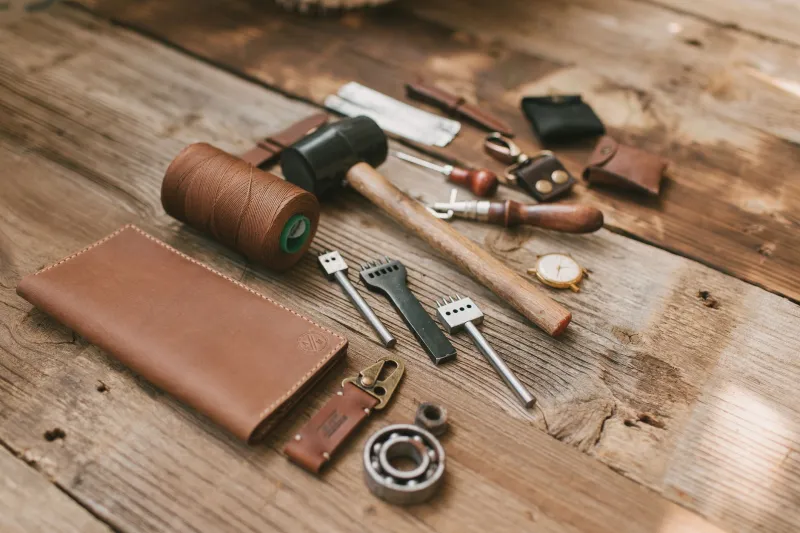
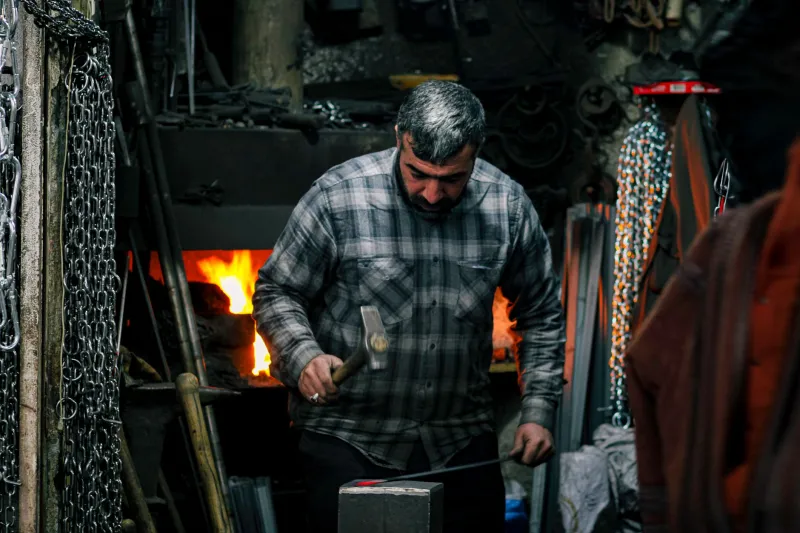
Somewhere in a workshop in western Pennsylvania, a leather apron that has been worn nearly every working day for eleven years is being carefully restitched along its left shoulder seam. The apron's owner, a blacksmith named Garrett Hollis, could replace it in an afternoon for roughly forty dollars. Instead, he has brought it to the same small-batch leather goods studio that made it — because the maker offered a repair guarantee, and because Hollis believes, without apology, that the apron has more years in it yet.
"It knows my body," he says simply. "A new one would take another two years to feel right."
That quiet conviction — that an object worth owning is worth maintaining — sits at the heart of a growing cultural shift. Repair culture, once the province of necessity, has re-emerged as a principled stance against the disposability cycle that dominates mass-market consumption. And handcrafted goods, by their very nature, are positioned at the center of this movement.
Designed for the Long Return
The difference between a handcrafted object and its mass-produced counterpart is not merely aesthetic. It is architectural. When an artisan constructs a piece — whether a forged kitchen knife, a hand-stitched wallet, or a joinery-fitted cabinet — the methods and materials selected often anticipate wear, not as a failure state, but as an expected phase of the object's life.
Dovetail joints can be re-glued. Wooden handles can be replaced without discarding the blade. Leather can be reconditioned, resoled, and restitched. These are not accidents of craft; they are deliberate decisions embedded in the design philosophy of makers who intend their work to outlast any single owner's use of it.
Contrast that with the engineered obsolescence that characterizes so much of modern manufacturing. Components are fused, sealed, or proprietary-fastened precisely to make repair impractical. The object is not meant to be fixed. It is meant to be exchanged.
"Mass production doesn't want you to repair," says Maren Solís, a furniture restorer based in Austin, Texas, who has spent fifteen years bringing heirloom-quality pieces back from what their owners feared was the end. "The economics only work if you keep buying. Handcrafted work inverts that logic entirely."
The Right-to-Repair Conversation, Extended
Much of the national right-to-repair debate has centered on electronics — the question of whether consumers should have legal access to the parts, tools, and documentation needed to fix their own devices. But advocates within the craft and artisan communities argue that the philosophical underpinning of that movement applies equally to durable goods of every kind.
The Federal Trade Commission has taken steps in recent years to examine repair restrictions across industries, and several states have passed or proposed legislation broadening consumer repair rights. For handcrafted goods, however, the conversation is less legislative and more ethical: not whether you are permitted to repair, but whether the culture around premium goods encourages it.
Some artisan studios have begun formalizing what was once an informal understanding. They offer documented repair programs — lifetime guarantees on craftsmanship, not just materials — as a selling point that distinguishes their work from anything available at a big-box retailer. The message is direct: when this breaks, bring it back.
"We've repaired pieces that are twenty years old," says Thomas Ware, who runs a hand-forged cutlery studio in Vermont. "And every time we do, it reinforces for the customer why they spent what they spent. They didn't buy a knife. They bought a relationship with a knife."
The Economics of Stewardship
Skeptics often frame repair as a luxury — something only those with disposable income can afford to pursue, given the labor costs involved. But this framing collapses under scrutiny when the full lifecycle of an object is considered.
A mass-produced chef's knife purchased for thirty dollars may last three to five years before the handle cracks, the edge degrades beyond useful sharpening, or the blade develops corrosion that renders it unsafe. Over twenty years, a consumer may purchase four or five such knives, spending upward of one hundred fifty dollars in aggregate — and generating five discarded objects in the process.
A hand-forged knife purchased for two hundred dollars, maintained with periodic sharpening and a single handle replacement over the same period, costs perhaps fifty dollars in upkeep. The total outlay is higher, but the per-year cost is comparable, and the environmental calculus is dramatically different.
"People do the math wrong," Solís observes. "They compare the purchase price, not the ownership cost. Once you extend the horizon, handcrafted almost always wins."
This is the second-life principle in practical form: the object that can be restored does not merely avoid the landfill — it actively reduces the demand for replacement goods, compressing the resource and labor costs that new production requires.
What Customers Are Learning
The customers who seek out repair are, by and large, not the same customers who purchased the object in the first place. They are, in many cases, inheritors — people who received a well-made piece from a parent or grandparent and discovered, sometimes with surprise, that it was still worth saving.
Clarissa Odom, a Nashville-based interior designer, brought a set of hand-stitched dining chairs to a local upholsterer after inheriting them from her grandmother. The chairs were sixty years old. The joints were sound. The frames were solid walnut. Only the fabric had given way.
"The upholsterer told me that whoever built those chairs didn't cut corners," she recalls. "He could tell by the way the webbing was attached, the way the corners were finished. He said he wished everything he worked on was made like that."
The chairs now occupy the head of her dining table. They will, by all reasonable estimation, outlast her.
Repair as a Form of Respect
There is a moral dimension to this conversation that transcends economics. To repair a handcrafted object is to honor the labor embedded in it — the hours of deliberate making, the material knowledge, the physical and intellectual effort of the artisan who shaped it. To discard such an object prematurely is, in a meaningful sense, to erase that labor from the record.
This is why so many craftspeople speak about repair not as a service but as a form of stewardship. The object carries history — its maker's, its owner's, and increasingly, the family's. Restoration preserves that continuity in a way that replacement never can.
At Voitheia Forged, the belief that what is shaped by hand deserves to endure is not merely a marketing position. It is a design imperative. Every object that leaves a skilled maker's workshop is a small argument against the throwaway economy — a quiet insistence that permanence, care, and the willingness to mend are not relics of a simpler time, but the most sophisticated response available to a culture drowning in its own discards.
The apron in Garrett Hollis's workshop will be returned to him next week, restitched and reconditioned. He will hang it on the same hook where it has always hung, and he will put it back on. It will feel, as it always does, exactly right.