The Object That Grows With You: On the Living Quality of Things Made by Hand
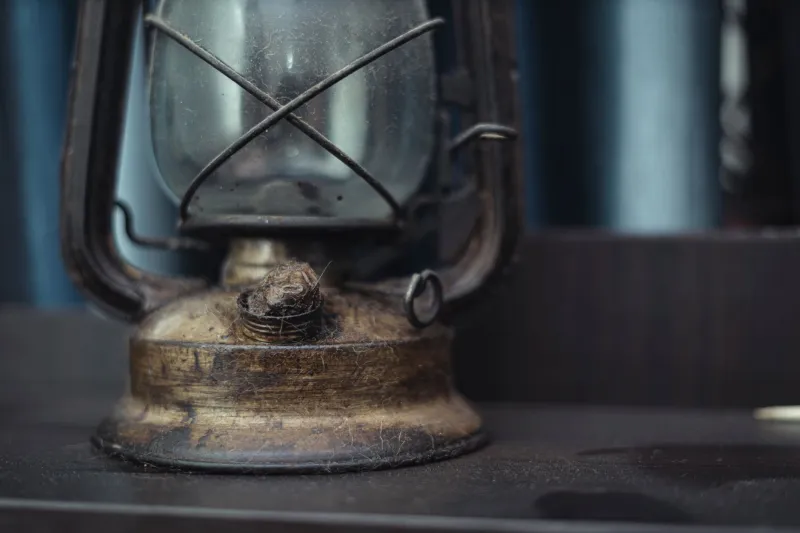
There is a particular quality of light on a well-used wooden surface — the kind that has been touched every day for years, that has absorbed the oils of a hand in winter and summer, that has been set down on tables and lifted again ten thousand times. It is not the glossy uniformity of a factory finish. It is something quieter and more specific: a depth that seems to come from inside the material rather than from its surface, a warmth that no coating applied at the moment of manufacture could produce.
This quality has a name in some traditions. In others it exists only as a recognition — the moment when a person picks up an old tool or runs a hand across a worn tabletop and understands, without being able to fully articulate why, that they are in contact with something that has been lived with.
It is one of the fundamental distinctions between objects made by hand and objects made by machine. The handcrafted piece does not arrive complete. It arrives as a beginning.
What Patina Actually Is
The word patina is used loosely, often as a synonym for age or wear. Its precise meaning is more interesting. Patina is the transformation of a material's surface through interaction with its environment — through oxidation, through contact, through the accumulation of use. It is not decay. It is a form of autobiography.
On copper and bronze, patina is a chemical process: the metal reacts with oxygen and moisture to develop the green and brown tones that collectors and craftspeople prize. On leather, it is the gradual darkening and softening that results from the absorption of oils and the compression of fibers under repeated handling. On wood, it is the closing of the grain, the mellowing of color, the development of a surface that reflects light differently than it did when the piece was new.
In each case, what is happening is a collaboration between the material and its conditions of use. The object is recording its history in the only language available to it.
A mass-produced piece, finished to resist this process — sealed against the environment, coated to maintain a uniform appearance indefinitely — does not develop patina. It develops wear. These are not the same thing. Wear is the degradation of a surface that was not designed to change. Patina is the evolution of a surface that was.
The Role of the Maker's Choices
Not every handcrafted piece ages well. The capacity to develop honestly over time is not a guaranteed feature of hand production; it is the result of specific decisions made during the making.
A craftsperson who selects an oil finish for a wooden piece rather than a film finish is making a choice about how that piece will age. The oil penetrates the wood and becomes part of it, feeding the material over decades as it is renewed by the owner. The surface that results is not protected from change — it is prepared for it. Scratches and marks are absorbed into the overall character rather than appearing as violations of a sealed surface.
A leather worker who chooses vegetable-tanned hides over chrome-tanned alternatives is selecting a material that will respond to use rather than resist it. The tannins that give the leather its initial stiffness are the same compounds that allow it to take on the specific shape of its owner's hand, to darken in the places that receive the most contact, to develop the particular softness that comes from years of careful use.
These are not accidents. They are the considered choices of makers who understand that the object's life extends far beyond the moment it leaves the workshop — and who design for that life deliberately.
The Contrast With Designed Obsolescence
The dominant logic of mass consumer production operates on a different timeline. Products are designed to function adequately for a period calibrated to the manufacturer's interest in repeat purchase, then to fail or to appear sufficiently outdated that replacement feels necessary rather than optional. The aesthetic language of mass production reinforces this: surfaces that look identical and pristine when new but show every mark of use as degradation rather than character; materials chosen for cost and uniformity rather than for aging behavior; construction methods that resist repair in favor of replacement.
This is not a conspiracy. It is a rational response to the economic incentives of volume manufacturing. But its consequences for the relationship between people and their objects are significant. In a culture organized around replacement, the skills of care and maintenance atrophy. The patience required to allow a material to develop its full character over years becomes difficult to sustain when the surrounding culture insists that newer is better by definition.
A handcrafted object proposes a different relationship. It asks its owner to participate in its ongoing development — to oil it, to use it without excessive caution, to allow the marks of daily life to accumulate into something that records a shared history rather than simply registering damage.
Decades as a Dimension of Design
The most considered handcrafted pieces are designed with decades in mind as a dimension of the work — not as an afterthought, but as an integral part of what the piece is meant to be.
A wooden chest made from quartersawn white oak, finished in linseed oil, jointed with hand-cut dovetails, and fitted with solid brass hardware is not simply a storage solution. It is an object engineered to improve across a human lifetime. The oak will deepen in color and close in grain. The oil finish will develop a surface that is simultaneously more beautiful and more protective than it was when new. The brass will move through oxidation states that trace the passage of seasons and years. The dovetails, cut with the slight variations that distinguish hand work, will hold as firmly in forty years as they do today.
The owner of such a piece is not a consumer in the conventional sense. They are a steward. The object that arrives in their home is not a finished product awaiting disposal; it is a living process awaiting participation.
This is, perhaps, the deepest argument for things made by hand. Not their beauty at the moment of completion — though that is real — but their capacity to become more fully themselves through the passage of time and the accumulation of use. The factory can produce an object. Only the hand, working honestly with honest materials, can produce something that grows.