When the Teacher Cannot Be Wrong: The Hidden Barrier Inside Every Master-Apprentice Relationship
The Unspoken Condition in the Workshop
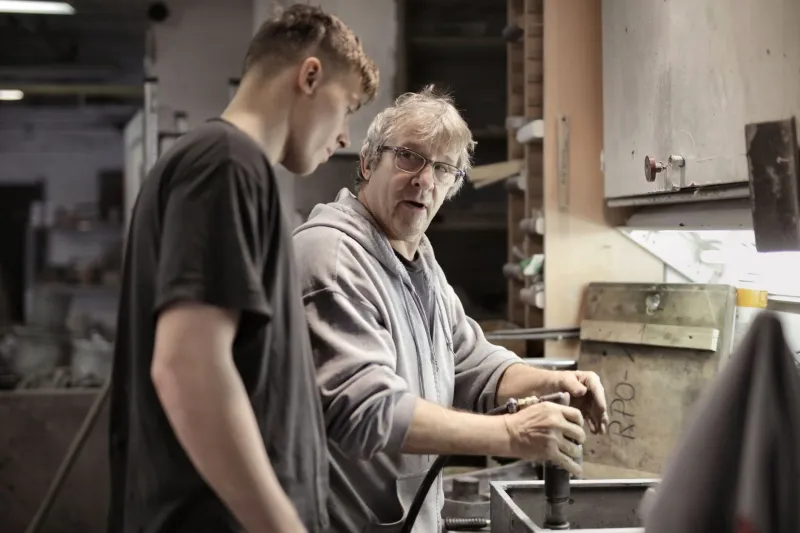
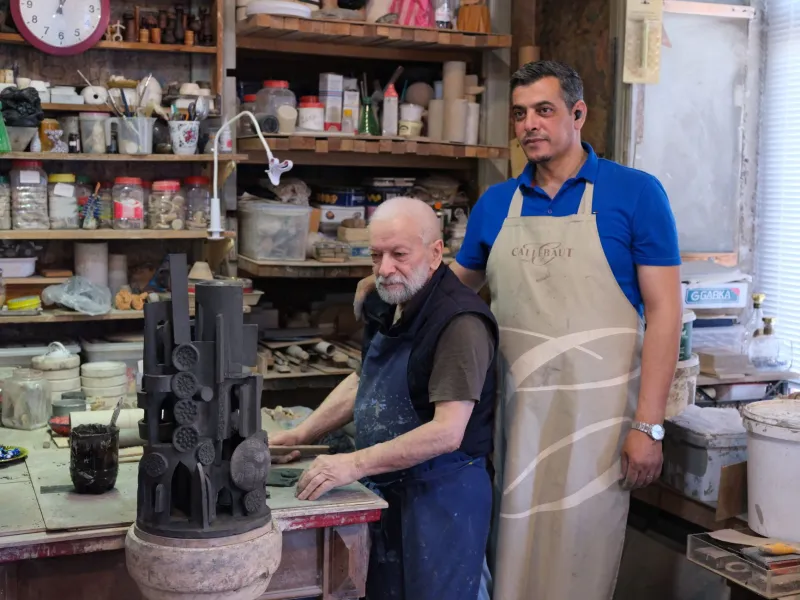
There is a particular silence that settles over a workshop when an apprentice makes a mistake in front of a master. It is not the silence of concentration. It is the silence of measurement—the apprentice calculating how much the error will cost them in standing, the master calculating how much it reflects on the teaching. Both parties are performing a kind of emotional arithmetic, and neither result serves the work.
This dynamic is rarely discussed openly within craft communities, yet it may be the single greatest obstacle to the transmission of skilled trades in America today. The country has spent considerable energy lamenting the shortage of trained craftspeople, the closing of trade schools, and the cultural drift away from making things by hand. What receives far less attention is the quieter failure happening inside the mentorship relationships that do exist—the ones where a gifted maker and a willing student stand side by side, and still the knowledge does not transfer cleanly.
The reason, more often than not, has nothing to do with technique.
Mastery and Its Peculiar Burden
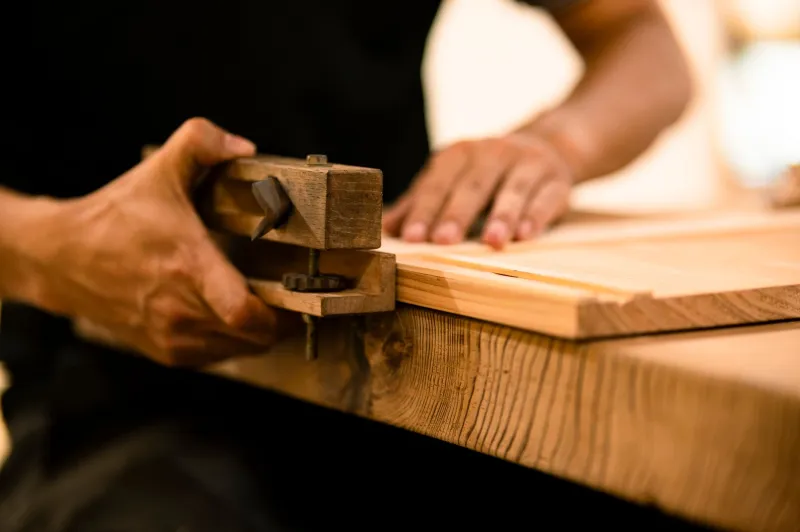
To become genuinely masterful at a craft is to undergo a long and often brutal process of self-correction. The blacksmith who has worked iron for thirty years has internalized failure so completely that the body now compensates before the mind has fully registered the error. The cabinetmaker who has fitted thousands of joints no longer needs to think about the adjustment—the hands simply know. This is the beauty of deep expertise, and it is also its trap.
When a skill becomes that thoroughly embodied, the practitioner loses access to the intermediate steps. They cannot always explain what they are doing because they are no longer consciously doing it. The knowledge has migrated below the threshold of language. And when an apprentice struggles with something that now feels effortless to the master, the master's first instinct is often not empathy—it is confusion, followed by a kind of impatience that the master may not even recognize in themselves.
Worse still, many craftspeople have built their identity so completely around the quality of their output that a poorly executed piece feels like a personal indictment. When an apprentice produces such a piece under their supervision, the master experiences it as a reflection of their own standing. The correction that follows is rarely about the apprentice's growth. It is about restoring the master's sense of order.
What Psychological Safety Actually Means on the Shop Floor
The concept of psychological safety—the condition under which people feel free to take risks, ask questions, and admit errors without fear of punishment—has become well-established in organizational research. Its application to craft mentorship, however, remains underexplored.
In a workshop setting, psychological safety does not mean permissiveness. It does not mean that substandard work is celebrated or that precision is treated as optional. What it means is that the apprentice can bring a failed piece to the master without bracing for contempt. It means the student can say, "I do not understand why this keeps happening," without that admission being read as evidence of fundamental inadequacy.
Creating that environment requires something most master craftspeople have never been asked to develop: the ability to be openly wrong in front of a student. Not wrong about technique—masters are rarely wrong about that—but wrong about how they first explained something, wrong about the sequence in which they introduced a concept, wrong about the assumption that a particular step was obvious. That kind of wrongness demands a separation of identity from output that the craft itself never required of them.
Learning to Separate the Self from the Work
Some of the most effective craft mentors working in the United States today describe a specific turning point in their teaching—a moment when they recognized that their investment in a piece's quality was actively harming the apprentice's ability to learn from it.
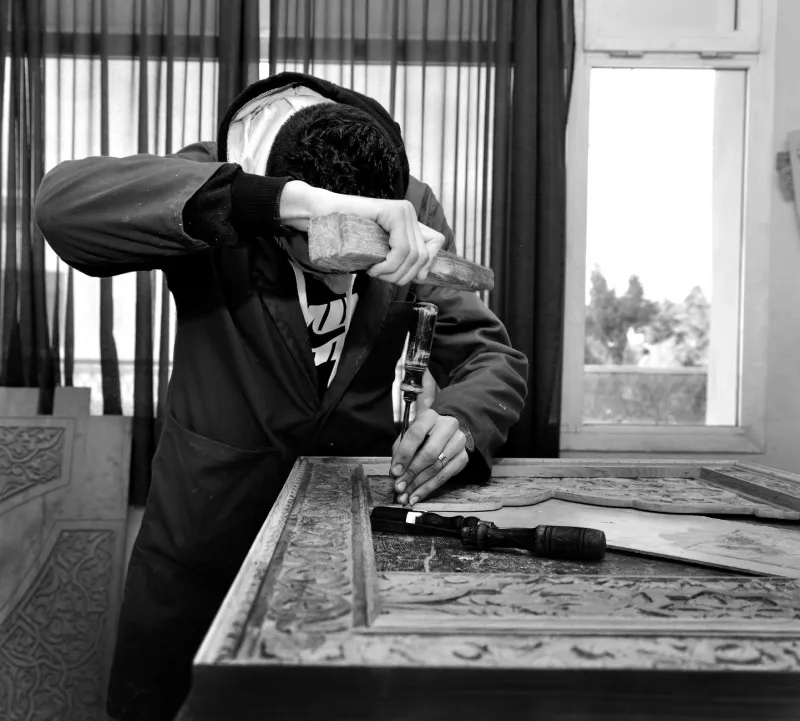
One furniture maker in western North Carolina recounted watching a young apprentice sand against the grain on a walnut panel. His first impulse was to take the sandpaper from the student's hand and demonstrate the correct motion himself. Instead, he stopped, asked the apprentice what they were trying to achieve, and let the conversation reveal the gap in understanding. The panel was ruined. The lesson was not.
That willingness to let a piece fail in service of the student's comprehension requires a kind of emotional discipline that runs counter to everything the master has trained themselves to feel. A craftsperson's entire career is built on the premise that quality is non-negotiable. To deliberately permit a substandard outcome—even a temporary, instructional one—feels like a betrayal of the work itself.
But the distinction worth drawing here is between the finished object and the learning process. The finished object must be excellent. The learning process, by its very nature, cannot be. Confusion, misapplication, and revision are not aberrations in the path to mastery—they are the path.
The Maker Who Admits Uncertainty
There is a particular quality that separates the craftspeople who produce exceptional apprentices from those who simply produce exceptional objects. It is not patience in the conventional sense, and it is not the ability to explain a technique clearly, though both of those matter. It is the willingness to say, in front of a student, "I am not entirely certain why this works, only that it does."
That admission is harder than it sounds. It disrupts the authority structure that most apprenticeships depend on. It invites the student into the master's own unresolved questions, which can feel destabilizing to both parties. But it also models something essential: that expertise is not the absence of uncertainty. It is the capacity to work skillfully within it.
Craftspeople who can demonstrate that quality—who can hold a piece they are unsure about and reason through it aloud rather than retreating to pronouncements—tend to produce apprentices who are far more resilient in the face of their own uncertainty. They have seen the master be uncertain and survive it. They have learned that not knowing is a workable condition, not a disqualifying one.
Building Something That Lasts Beyond the Object
Voitheia Forged has long held that the most enduring products of skilled craft are not always the objects themselves. They are the knowledge, the judgment, and the practiced attention that a maker carries forward from one generation to the next. When that transmission fails—when the knowledge stops at the master's workbench because the emotional conditions for teaching were never established—something is lost that no amount of technical documentation can recover.
The reformation of American craft mentorship will not come from curriculum redesign or institutional funding alone. It will come from individual makers who are willing to undertake a second, quieter apprenticeship: learning how to be wrong in front of the people they are trying to shape. That is not a diminishment of mastery. It may, in fact, be its highest expression.