The Workshop Without a Billboard: How Solo American Makers Earn Trust One Order at a Time
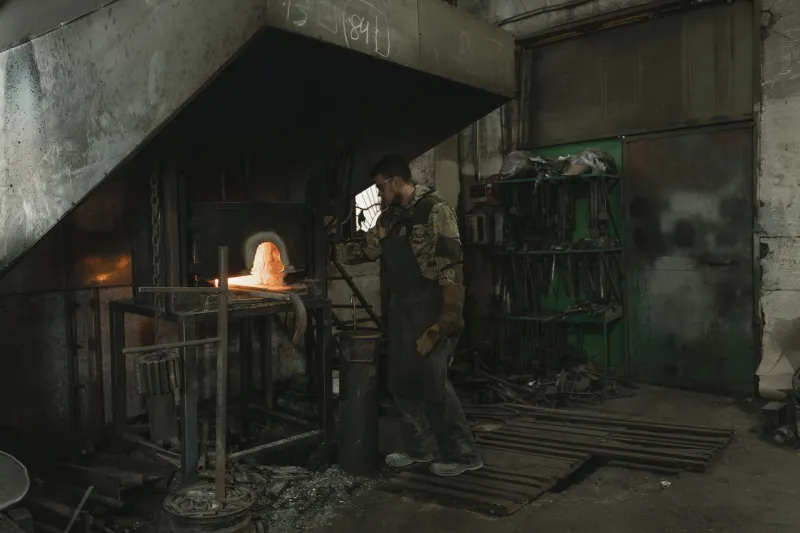
There is a particular kind of American business that keeps no advertising budget, employs no one, and answers every email itself. It occupies a converted garage in Ohio, a timber-frame barn in Vermont, a shared metal shop in Portland. And increasingly, it is outlasting businesses with a hundred times its revenue.
The solo craft workshop is often described as romantic, but romance does not explain its economics. What explains them is trust — specifically, the way trust behaves when a brand is one person deep.
The Economics of Being One Person
A micro-workshop cannot compete on volume, so it competes on verifiability. When you buy from a single maker, the supply chain is not merely short; it is a person you can call. Every claim — the steel is 1084, the oak was milled in-state, the piece was finished last Tuesday — can be checked against a human being with a reputation to protect.
This produces an unusual commercial dynamic. Large brands spend heavily to simulate intimacy: lifestyle photography, founder stories, chatbots trained to sound warm. The solo maker has the genuine article and spends nothing to fake it. Word-of-mouth, in this environment, is not a growth hack. It is the entire distribution strategy, and it functions only as long as the work deserves it.
Consider what this means for the maker's incentives. A corporation can absorb a bad quarter; an individual cannot absorb a bad reputation. The one-person workshop is structurally incapable of hiding behind a brand. Every failure is personally owned, and every success compounds into a name that carries weight in a small, attentive community of buyers.
Transparency as Infrastructure
The most successful independent makers treat transparency not as a virtue but as infrastructure. They post their process openly, photograph their mistakes, explain why a shipment slipped. Some publish their material sources; a few publish their prices and the reasoning behind them.
This is not performance. It is risk management. A maker who has shown the work all along cannot be accused of hiding it afterward. In an era when consumers have grown deeply suspicious of anonymous imports and unverifiable origin stories, the workshop that documents itself holds a durable advantage.
What a Discerning Buyer Should Look For
Buying directly from a maker is a different act than buying from a store, and it rewards a different kind of diligence:
- A visible process. Look for work-in-progress photos, not just finished glamour shots. Makers who show the middle of the journey are showing you how they think.
- Specific materials. Vague language like "premium steel" is a warning sign; "A2 tool steel, hardened to 58–60 HRC" is a conversation.
- A waitlist, not instant shipping. Genuine made-to-order work takes time. A maker who can ship a custom piece tomorrow is likely not making it custom.
- A stated policy on repairs. Makers who intend to stand behind their work usually say so plainly — and many offer lifetime adjustment or repair for a piece they forged themselves.
- Evidence of a community. Repeat customers, return commissions, and buyers who post their pieces years later are the truest signal available.
Small by Design
It is tempting to read the rise of the micro-workshop as a nostalgic retreat from modern commerce. The evidence suggests the opposite: it is a thoroughly rational response to it. As buyers grow skeptical of scale, the smallest possible business model — one maker, one bench, one name on the door — becomes the most credible claim in the marketplace.
The showroom of one has no sales floor, no staff, no billboard. It has a person, a craft, and a steadily accumulating record of keeping promises. For a growing number of American buyers, that has proven to be the only advertising that matters.