Before the Mastery Comes the Monotony: Why So Many Young Makers Quit Too Soon
There is a moment, familiar to every serious craftsperson, that arrives somewhere in the second or third year of learning a trade. The initial excitement of handling new tools has faded. The beginner's enthusiasm — that bright, optimistic energy that makes every shaving of wood or strike of hammer feel like revelation — has quieted. What remains is something far less romantic: the daily discipline of doing the same thing, imperfectly, again and again, with no clear signal that improvement is accumulating.
For generations of American apprentices, this moment was understood as the threshold. Cross it, and genuine skill begins to take root. Retreat from it, and you remain, permanently, a beginner with ambitions. Today, that threshold is being abandoned at a rate that concerns master craftspeople, trade educators, and anyone who cares about the survival of handmade work in this country.
A Culture That Has Forgotten How to Wait
To understand why young Americans are walking away from apprenticeships before their skills have had time to form, it is necessary to examine the broader environment in which those young people have been raised. The digital economy has, over the past two decades, systematically rewarded immediacy. Feedback arrives in seconds. Audiences form overnight. Platforms are designed to deliver novelty continuously, training the mind to interpret the absence of rapid progress as evidence of failure rather than as the ordinary texture of learning.
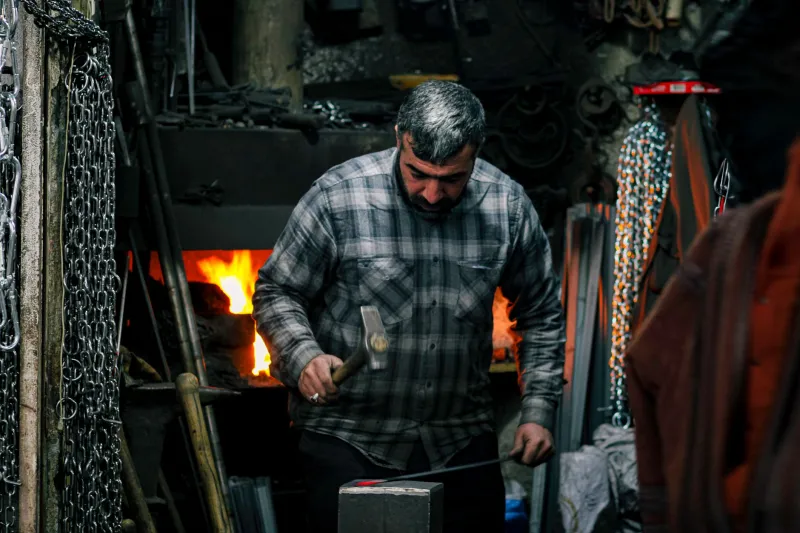
Craft trades operate on an entirely different logic. A blacksmith does not produce a finished blade of any real quality within weeks of beginning. A woodworker does not develop a reliable sense of grain direction, moisture content, or joinery tolerance in a single season. These skills are biological as much as intellectual — they are encoded gradually into the hands, the eyes, the intuition, through repetitions measured in the thousands. There is no shortcut, and there is no algorithm that accelerates the process.
For a generation accustomed to measurable, visible, shareable progress, this invisibility of early-stage development can feel indistinguishable from stagnation. The psychological weight of that misreading is not trivial.
What Emerging Makers Say About the Difficult Years
Conversations with young craftspeople who have chosen to stay — who have crossed that threshold and emerged on the other side with genuine competence — reveal a consistent pattern. Nearly all of them describe a period of serious doubt, often lasting months, during which they questioned whether the investment of time was rational.
One furniture maker in her late twenties, who spent three years under the guidance of a master joiner in rural Vermont before opening her own small workshop, describes it plainly: "There were entire months where I felt like I was getting worse, not better. My mentor kept telling me that was normal, that my eye was developing faster than my hands, and so I was seeing my own mistakes more clearly before I had the skill to prevent them. Intellectually, I understood that. Emotionally, it was brutal."
A young bladesmith in Tennessee who completed a five-year apprenticeship offers a similar account. "Everyone wants to show the finished knife. Nobody wants to post a video of the forty-seventh handle they shaped that still isn't quite right. But that forty-seventh handle is where the learning lives. The finished piece is just the proof."
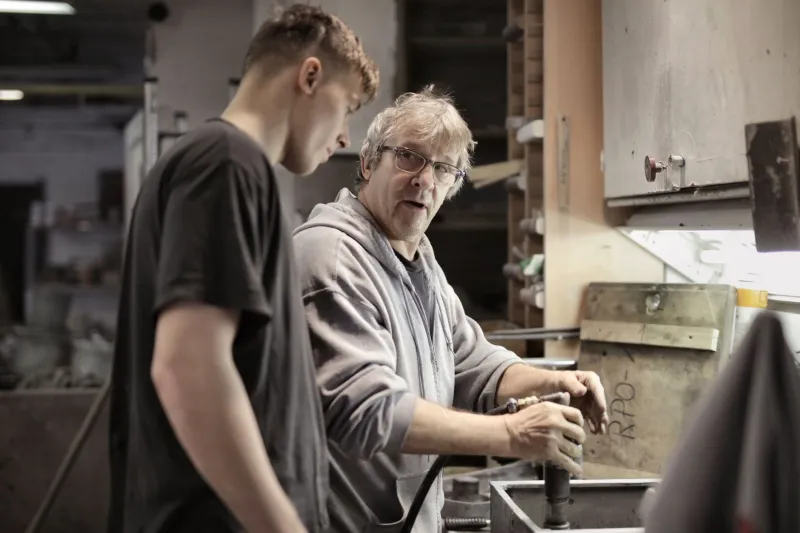
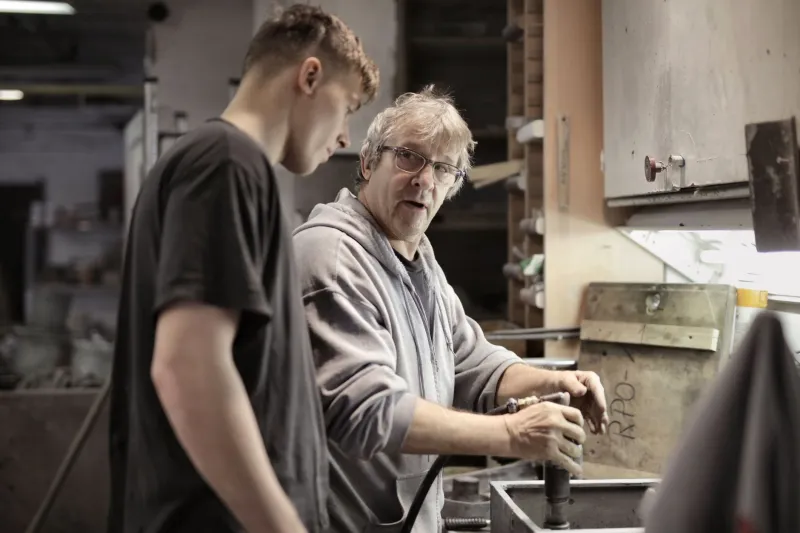
What these makers share, beyond their willingness to endure, is access to a mentor who could name what they were experiencing — who could frame the discomfort not as a warning sign but as a reliable indicator of genuine progress. That framing, it turns out, is not a small thing.
The Mentorship Gap and Its Consequences
One of the most significant structural problems facing American craft apprenticeship today is not attitudinal — it is logistical. The generation of master craftspeople who might otherwise be transmitting their knowledge to younger makers is aging rapidly, and the institutional frameworks that once connected novices to experts have largely dissolved.
Union apprenticeship programs in the skilled trades have contracted sharply over the past four decades. Vocational education, once a respected and well-funded pathway in American secondary schools, was systematically defunded through the 1980s and 1990s in favor of college-preparatory curricula. Community colleges offer introductory coursework, but introductory coursework is not apprenticeship. The gap between a twelve-week class and a three-year mentored relationship is not a matter of duration alone — it is a difference in kind.
Without a mentor who has navigated the difficult middle years personally, a young maker has no reliable map for that territory. The discomfort remains, but it loses its meaning. It becomes evidence of inadequacy rather than evidence of growth.
What Institutional Support Could Actually Accomplish
Several organizations across the United States are attempting to rebuild the connective tissue between experienced craftspeople and emerging ones. Some operate through formal guild structures. Others function as maker residencies, placing young craftspeople in working shops for extended periods with explicit mentorship obligations built into the arrangement. A smaller number of regional craft schools have developed multi-year certificate programs designed to approximate the depth, if not the duration, of traditional apprenticeship.
These efforts share a common insight: the problem is not that young Americans lack interest in craft. Interest, in fact, has never been higher. The popularity of handmade goods, the growth of the artisan market, and the cultural visibility of makers across every medium suggest a genuine appetite for handcrafted work. What is missing is not desire — it is infrastructure.
If community organizations, regional economic development programs, and craft institutions were to invest seriously in formal mentorship pipelines — with stipends for apprentices, modest compensation for master craftspeople willing to take on mentees, and credentialing systems that give completion of an apprenticeship genuine market value — the calculus for young makers would shift meaningfully. The years of difficulty would still be present. They cannot be removed. But they could be contextualized, supported, and recognized in ways that make them survivable.
The Irreplaceable Value of Staying
There is something that cannot be taught in a weekend workshop or absorbed from a tutorial series, no matter how well produced. It is the particular intelligence that develops only through sustained, mentored repetition — the ability to read a material's resistance, to adjust pressure instinctively, to know when a piece is finished not because a measurement confirms it but because the hand says so.
This intelligence is what separates a craftsperson from a hobbyist, and it is what gives handcrafted objects their enduring value. Customers who seek out genuinely handmade work are not simply purchasing an aesthetic. They are purchasing the accumulated judgment of a person who stayed long enough to develop it.
The young makers who choose to remain — who endure the monotony, who accept the guidance of those further along the path, who resist the cultural pressure to pivot the moment progress becomes invisible — are not simply learning a trade. They are preserving a form of human knowledge that cannot be digitized, automated, or replicated at scale.
That preservation is, by any reasonable measure, worth the difficulty of the years it requires.