Where the Fire Still Works: Five American Workshops That Reward the Drive
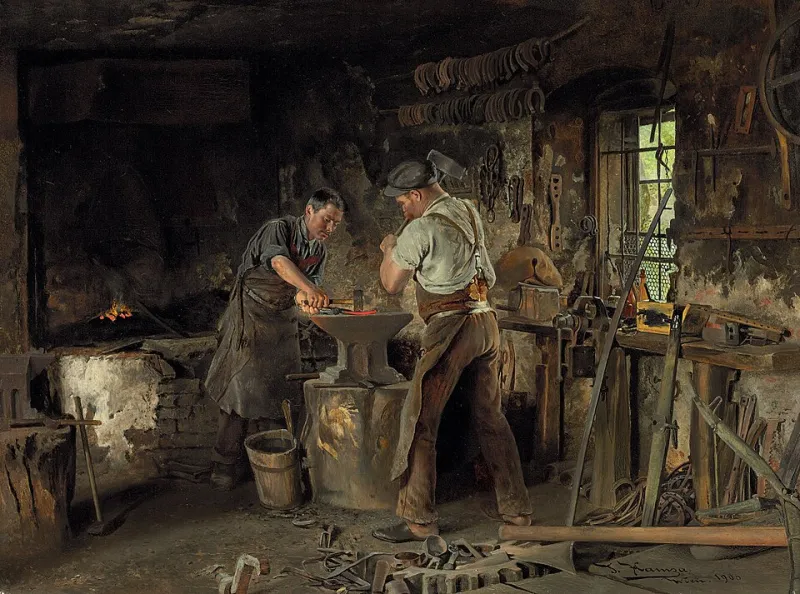
Photo: Johann Hamza (Moravia 1850-1927 Vienna), Public domain, via Wikimedia Commons
There is a particular kind of silence that falls over a visitor the first time they watch a smith pull glowing steel from the fire. It is not the silence of boredom. It is the silence of someone recalibrating — realizing that the object on the shelf, the one they had priced in their head, is in fact the residue of fire, muscle, and several hundred decisions. Distance buying cannot teach this. Only standing in the shop can.
For travelers willing to leave the interstate, America still holds working workshops in nearly every region, places where craft is not a theme but a schedule. What follows are five, chosen for geography as much as for quality, each offering a different discipline and a different lesson in how things get made.
The Blacksmithy: New England's Forge Tradition
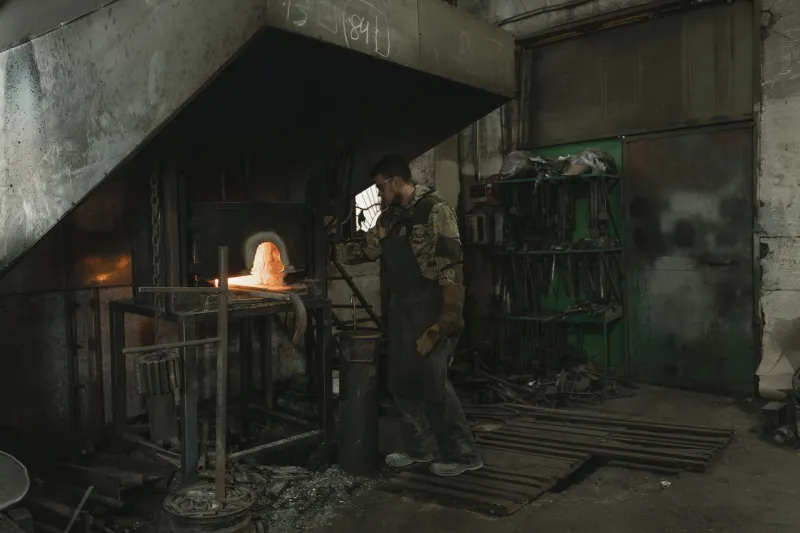
In the hill towns of western Massachusetts and Vermont, small smithies continue a tradition older than the republic. These are working shops: fire tools, hardware, architectural ironwork, and kitchen knives made on anvils that have outlasted several owners. Many offer open-forge demonstrations on weekends, particularly in autumn, when the leaf traffic already fills the roads.
What a visit looks like: You will likely smell the shop before you see it — coal smoke and quenching oil. Expect to stand close, ask questions mid-hammer-stroke, and watch a bar of steel become a hook or a hinge in under twenty minutes.
Why it changes the object: Once you have seen how much fire management precedes even the simplest taper, a hand-forged trivet stops being a trivet.
The Chairmaker: The Appalachian Backcountry
In western North Carolina, in the valleys around Asheville and Boone, chairmakers still rive green oak with a froe, shave spindles at the shave horse, and weave seats from bark and rush. This is the heart of the green-wood tradition, and several shops welcome visitors by appointment or during scheduled studio days.
What a visit looks like: Less fire, more shaving. The sound is the tell — the long, ripping note of a drawknife through wet oak. Ask about the steam box; most makers are proud to show it.
Why it changes the object: A ladderback chair bought after watching one made is understood, correctly, as a living structure — wood that was shaped wet and dried into tension.
The Bladesmith: The Texas Hill Country
Texas holds an outsized share of America's working bladesmiths, many clustered in the Hill Country west of Austin. Forging damascus billets, grinding bevels, and heat-treating by eye and magnet, these makers produce kitchen and field knives that sell largely through waitlists — which makes an in-person visit doubly valuable.
What a visit looks like: Often by appointment. Bring your questions about steel; bladesmiths are, as a breed, generous with metallurgy. Some host annual hammer-ins where the public can watch a dozen forges running at once.
Why it changes the object: Seeing a billet folded and welded dissolves the mystique of damascus patterns into something better: understanding.
The Leather Shop: The Plains and the Southwest
From Kansas to New Mexico, saddle shops and harness makers keep leatherwork alive in its original commercial habitat. These shops made their living serving ranchers before they ever served collectors, and that practical inheritance shows in every saddle stitch.
What a visit looks like: The smell of vegetable-tanned leather, the click of the rotary punch, and often a wall of tools that look like surgical instruments. Many shops will show you a belt or bag in progress if you ask.
Why it changes the object: Hand-stitching's diagonal thread line, once explained, becomes visible everywhere — and machine-perfect rows start to look like what they are.
The Pottery Studio: The Midwest Clay Belt
Ohio, Indiana, and Minnesota hold a deep bench of functional potters — makers of mugs, pitchers, and casseroles meant for daily use. Studio sales twice a year, typically spring and late November before the holidays, are the traditional way to buy direct, and many potters open their wheels for demonstrations during those events.
What a visit looks like: A working studio, not a gallery. Kilns, buckets, wedging tables. You may be handed a lump of clay whether you asked or not.
Why it changes the object: A mug from a potter you watched at the wheel carries the memory of the throwing rings you saw form.
Buy Direct, and Buy Early
One practical note applies to all five: makers sell out. The workshop economy runs on small batches and waitlists, not warehouse stock. If a road trip is in your plans, contact the shop first — most working makers answer email personally and will tell you exactly when they fire, bend, or forge next. And if a visit isn't possible this year, most of these shops ship; buying direct from the bench remains the surest way to know what you are holding.